I was in Las vegas recently, and was riding to the airport in a Toyota Prius cab. When I was in Vegas a few months ago, I rode in a Chevy Malibu cab.
I was struck by the roominess of the Prius’s back seat. Fabulous.
I like to chat up cab drivers, and asked how well the the cabs were holding up in Vegas. The driver gushed about how thrifty they are and how nicely they hold up.
The Malibu, by contrast, was a nightmare of a cab. The backseat was hopeless, my knees in my chest. [This can and the others in the same fleet haad a divider between the front and rear seat, whwile the Prius cab went without the divider. Egress and ingress in the backseat was awful. And the cabbie said that they were showing excessive wear after just 20,000 miles in Vegas where the roads are pretty smooth and there is no road-salt to worry about.
The Malibu I have driven as a press car was a nice piece of work. And it was North American Car of the Year last year. But it’s no taxi.
TrackBack URL for this entry: http://blogs.businessweek.com/mt/mt-tb.cgi/12122.1387713104
Reader Comments
pdbw
October 20, 2008 05:16 PM
Huh? Malibu has 1" less rear legroom (and is only an inch and half shorter) and your knees are in your chest? What are you--6'8"? And what do you mean by 'excessive wear'? Tires? Rusty body panels? And color me a little skeptical of your sample size of one (for each vehicle)...
From Kiley: The Malibu had a divider installed, which cut into the rear leg-room. The Prius fleet went without the divider.
As for holding up, the cabbie told me brakes, seat interior and body rattles.
Demeron
October 21, 2008 12:22 AM
David,
This post highlights a very fundamental difference between a US and a Japanese auto maker. Back seat roominess and overall durability are two indicators of the difference.
Your comfort report and the cab driver's comments on wear show the results to end users of the difference.
The Japanese vehicle manufacturer has taken very deliberate steps to understand the end user expectations and to create a product that satisfies them. The US manufacturer obviously missed that step.
US automakers can reverse the problem if - they make a conscious decision to change their approach to match that of their Japanese competitors. That requires the individuals in the company to personally understand the need and to adjust, since they drive the overall outcome of the company.
Have more information at at dskouson.blogspot.com.
Johnny
October 21, 2008 01:53 PM
yea i agree the prius are made to have people in the backseat, when the mailbu is more designed for the front passengers.
MaplewoodTransmission.com
Unk
October 21, 2008 02:24 PM
I would have to disagree with you. I am a Las Vegas taxi driver and have driven the Malibu. The car is solid, good on gas, and most passengers like it.
Is the Malibu the most ideal vehicle for a cab? course not, a mini-van is. However the Malibu gets 50% better gas mileage and does the job better than most vehicles I have driven as cab.
The absolute worse vehicles we ever had were Toyota's...trash as cabs. You would run thru a set of brakes in less than 5k.
MarkT
October 21, 2008 03:30 PM
I have a Malibu, a 2006 bought new in Jan08 (not the current generation), my first Chevy ever and my first NA car in 30 years. It has sucked the life out of driving pleasure, a design based on a queen size mattress, no surprise to me that GM is going out of business, only a retired UAW member could find this drive pleasant. Our Sonota is a huge step up and the Korean's have been making cars for what 5 minutes. I find, for the 1st time ever, i am embarrassed to tell people what kind of car i drive, i will sell before 3 year warranty is done and then it's back to real cars and let GM go down the tubes where they clearly belong.
Paul
October 22, 2008 03:26 AM
>>> From Kiley: The Malibu had a divider installed, which cut into the rear leg-room. The Prius fleet went without the divider. As for holding up, the cabbie told me brakes, seat interior and body rattles.
Thanks for providing that. Perhaps you might consider updating your blog entry with that critical information (as I doubt most people read the comments).
So we are supposed to take the anecdotal word of one anonymous cabbie on the durability of a car? Do we know if the cars your cabbie evaluated were purchased new or used?
>>> The Malibu I have driven as a press car was a nice piece of work.
Just about every car I test drive I get in the back seat. From what I can tell Kiley did not previously review the car for BW...so I guess that is ok. Though I did find this...
http://www.businessweek.com/autos/autobeat/archives/2006/04/lutz_on_warpath.html
Eric Lai
October 22, 2008 01:25 PM
I think at least in California, you can't install a divider in a Prius because it comes standard with side air bags/side curtain air bags and a divider would interfere. I'm guessing that Malibu fleet models don't have them standard. Never ridden in a Prius cab before, but I've heard that Escape Hybrid owners are also pretty happy bunch and that the ROI comes in at about 150,000 miles.
The Crown Vics I've ridden in were all comfortable and seemed pretty sold even with 200k+ on the odometer, but the few Camry cabs I've ridden in San Francisco had a lot of rattling coming from the suspension bits with far less mileage than that.
Toyota Prius Hybrid
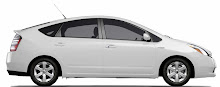
Toyota Prius Hybrid White

Subscribe to:
Post Comments (Atom)

 Posts
Posts


No comments:
Post a Comment