The latest additions of the Toyota Prius to the city of Chattanooga fleet were assigned to police service technicians working in the downtown area.
The Toyotas replaced Chevy Trackers and are expected to be more fuel efficient than the Trackers, officials said.
According to Brian Kiesche of Fleet Services, the Prius gets an average 34 mpg to 49 mpg which saves about $2,000 a year with the current cost of fuel. This is in comparison to the Ford Taurus or other typical mid-sized sedan.
The Prius has been in use by the city since 2004 and with the new additions, the city now has a total of 14. All but the last three vehicles are in use at the Public Works division.
Toyota Prius Hybrid
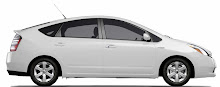
Toyota Prius Hybrid White
Saturday, October 25, 2008

Worst Cab Ever: Chevy Malibu
I was in Las vegas recently, and was riding to the airport in a Toyota Prius cab. When I was in Vegas a few months ago, I rode in a Chevy Malibu cab.
I was struck by the roominess of the Prius’s back seat. Fabulous.
I like to chat up cab drivers, and asked how well the the cabs were holding up in Vegas. The driver gushed about how thrifty they are and how nicely they hold up.
The Malibu, by contrast, was a nightmare of a cab. The backseat was hopeless, my knees in my chest. [This can and the others in the same fleet haad a divider between the front and rear seat, whwile the Prius cab went without the divider. Egress and ingress in the backseat was awful. And the cabbie said that they were showing excessive wear after just 20,000 miles in Vegas where the roads are pretty smooth and there is no road-salt to worry about.
The Malibu I have driven as a press car was a nice piece of work. And it was North American Car of the Year last year. But it’s no taxi.
TrackBack URL for this entry: http://blogs.businessweek.com/mt/mt-tb.cgi/12122.1387713104
Reader Comments
pdbw
October 20, 2008 05:16 PM
Huh? Malibu has 1" less rear legroom (and is only an inch and half shorter) and your knees are in your chest? What are you--6'8"? And what do you mean by 'excessive wear'? Tires? Rusty body panels? And color me a little skeptical of your sample size of one (for each vehicle)...
From Kiley: The Malibu had a divider installed, which cut into the rear leg-room. The Prius fleet went without the divider.
As for holding up, the cabbie told me brakes, seat interior and body rattles.
Demeron
October 21, 2008 12:22 AM
David,
This post highlights a very fundamental difference between a US and a Japanese auto maker. Back seat roominess and overall durability are two indicators of the difference.
Your comfort report and the cab driver's comments on wear show the results to end users of the difference.
The Japanese vehicle manufacturer has taken very deliberate steps to understand the end user expectations and to create a product that satisfies them. The US manufacturer obviously missed that step.
US automakers can reverse the problem if - they make a conscious decision to change their approach to match that of their Japanese competitors. That requires the individuals in the company to personally understand the need and to adjust, since they drive the overall outcome of the company.
Have more information at at dskouson.blogspot.com.
Johnny
October 21, 2008 01:53 PM
yea i agree the prius are made to have people in the backseat, when the mailbu is more designed for the front passengers.
MaplewoodTransmission.com
Unk
October 21, 2008 02:24 PM
I would have to disagree with you. I am a Las Vegas taxi driver and have driven the Malibu. The car is solid, good on gas, and most passengers like it.
Is the Malibu the most ideal vehicle for a cab? course not, a mini-van is. However the Malibu gets 50% better gas mileage and does the job better than most vehicles I have driven as cab.
The absolute worse vehicles we ever had were Toyota's...trash as cabs. You would run thru a set of brakes in less than 5k.
MarkT
October 21, 2008 03:30 PM
I have a Malibu, a 2006 bought new in Jan08 (not the current generation), my first Chevy ever and my first NA car in 30 years. It has sucked the life out of driving pleasure, a design based on a queen size mattress, no surprise to me that GM is going out of business, only a retired UAW member could find this drive pleasant. Our Sonota is a huge step up and the Korean's have been making cars for what 5 minutes. I find, for the 1st time ever, i am embarrassed to tell people what kind of car i drive, i will sell before 3 year warranty is done and then it's back to real cars and let GM go down the tubes where they clearly belong.
Paul
October 22, 2008 03:26 AM
>>> From Kiley: The Malibu had a divider installed, which cut into the rear leg-room. The Prius fleet went without the divider. As for holding up, the cabbie told me brakes, seat interior and body rattles.
Thanks for providing that. Perhaps you might consider updating your blog entry with that critical information (as I doubt most people read the comments).
So we are supposed to take the anecdotal word of one anonymous cabbie on the durability of a car? Do we know if the cars your cabbie evaluated were purchased new or used?
>>> The Malibu I have driven as a press car was a nice piece of work.
Just about every car I test drive I get in the back seat. From what I can tell Kiley did not previously review the car for BW...so I guess that is ok. Though I did find this...
http://www.businessweek.com/autos/autobeat/archives/2006/04/lutz_on_warpath.html
Eric Lai
October 22, 2008 01:25 PM
I think at least in California, you can't install a divider in a Prius because it comes standard with side air bags/side curtain air bags and a divider would interfere. I'm guessing that Malibu fleet models don't have them standard. Never ridden in a Prius cab before, but I've heard that Escape Hybrid owners are also pretty happy bunch and that the ROI comes in at about 150,000 miles.
The Crown Vics I've ridden in were all comfortable and seemed pretty sold even with 200k+ on the odometer, but the few Camry cabs I've ridden in San Francisco had a lot of rattling coming from the suspension bits with far less mileage than that.
I was struck by the roominess of the Prius’s back seat. Fabulous.
I like to chat up cab drivers, and asked how well the the cabs were holding up in Vegas. The driver gushed about how thrifty they are and how nicely they hold up.
The Malibu, by contrast, was a nightmare of a cab. The backseat was hopeless, my knees in my chest. [This can and the others in the same fleet haad a divider between the front and rear seat, whwile the Prius cab went without the divider. Egress and ingress in the backseat was awful. And the cabbie said that they were showing excessive wear after just 20,000 miles in Vegas where the roads are pretty smooth and there is no road-salt to worry about.
The Malibu I have driven as a press car was a nice piece of work. And it was North American Car of the Year last year. But it’s no taxi.
TrackBack URL for this entry: http://blogs.businessweek.com/mt/mt-tb.cgi/12122.1387713104
Reader Comments
pdbw
October 20, 2008 05:16 PM
Huh? Malibu has 1" less rear legroom (and is only an inch and half shorter) and your knees are in your chest? What are you--6'8"? And what do you mean by 'excessive wear'? Tires? Rusty body panels? And color me a little skeptical of your sample size of one (for each vehicle)...
From Kiley: The Malibu had a divider installed, which cut into the rear leg-room. The Prius fleet went without the divider.
As for holding up, the cabbie told me brakes, seat interior and body rattles.
Demeron
October 21, 2008 12:22 AM
David,
This post highlights a very fundamental difference between a US and a Japanese auto maker. Back seat roominess and overall durability are two indicators of the difference.
Your comfort report and the cab driver's comments on wear show the results to end users of the difference.
The Japanese vehicle manufacturer has taken very deliberate steps to understand the end user expectations and to create a product that satisfies them. The US manufacturer obviously missed that step.
US automakers can reverse the problem if - they make a conscious decision to change their approach to match that of their Japanese competitors. That requires the individuals in the company to personally understand the need and to adjust, since they drive the overall outcome of the company.
Have more information at at dskouson.blogspot.com.
Johnny
October 21, 2008 01:53 PM
yea i agree the prius are made to have people in the backseat, when the mailbu is more designed for the front passengers.
MaplewoodTransmission.com
Unk
October 21, 2008 02:24 PM
I would have to disagree with you. I am a Las Vegas taxi driver and have driven the Malibu. The car is solid, good on gas, and most passengers like it.
Is the Malibu the most ideal vehicle for a cab? course not, a mini-van is. However the Malibu gets 50% better gas mileage and does the job better than most vehicles I have driven as cab.
The absolute worse vehicles we ever had were Toyota's...trash as cabs. You would run thru a set of brakes in less than 5k.
MarkT
October 21, 2008 03:30 PM
I have a Malibu, a 2006 bought new in Jan08 (not the current generation), my first Chevy ever and my first NA car in 30 years. It has sucked the life out of driving pleasure, a design based on a queen size mattress, no surprise to me that GM is going out of business, only a retired UAW member could find this drive pleasant. Our Sonota is a huge step up and the Korean's have been making cars for what 5 minutes. I find, for the 1st time ever, i am embarrassed to tell people what kind of car i drive, i will sell before 3 year warranty is done and then it's back to real cars and let GM go down the tubes where they clearly belong.
Paul
October 22, 2008 03:26 AM
>>> From Kiley: The Malibu had a divider installed, which cut into the rear leg-room. The Prius fleet went without the divider. As for holding up, the cabbie told me brakes, seat interior and body rattles.
Thanks for providing that. Perhaps you might consider updating your blog entry with that critical information (as I doubt most people read the comments).
So we are supposed to take the anecdotal word of one anonymous cabbie on the durability of a car? Do we know if the cars your cabbie evaluated were purchased new or used?
>>> The Malibu I have driven as a press car was a nice piece of work.
Just about every car I test drive I get in the back seat. From what I can tell Kiley did not previously review the car for BW...so I guess that is ok. Though I did find this...
http://www.businessweek.com/autos/autobeat/archives/2006/04/lutz_on_warpath.html
Eric Lai
October 22, 2008 01:25 PM
I think at least in California, you can't install a divider in a Prius because it comes standard with side air bags/side curtain air bags and a divider would interfere. I'm guessing that Malibu fleet models don't have them standard. Never ridden in a Prius cab before, but I've heard that Escape Hybrid owners are also pretty happy bunch and that the ROI comes in at about 150,000 miles.
The Crown Vics I've ridden in were all comfortable and seemed pretty sold even with 200k+ on the odometer, but the few Camry cabs I've ridden in San Francisco had a lot of rattling coming from the suspension bits with far less mileage than that.
Motorist faces multiple charges after car strikes parked police cruiser in Dover
By AARON SANBORN
asanborn@fosters.com
Article Date: Tuesday, October 21, 2008
DOVER — A Madbury woman faces multiple charges after allegedly striking a police cruiser with her vehicle while trying to flee police on Monday evening.
Police say the incident started as a welfare check at 370 Washington St. shortly before 7 p.m. According to Sgt. Brant Dolleman, residents at the home called police because the woman had parked in their driveway for an hour with her vehicle running.
"They had no idea who she was," Dolleman said. "The report was the driver appeared asleep or unconscious."
Dolleman said an officer arrived at the home and parked behind the vehicle, a Toyota Prius, and as he was approaching the vehicle, the woman put the vehicle in reverse and almost struck the officer.
"The officer had to scramble out of the way and ended up on the hood," Dolleman said.
The Toyota then struck the passenger side of the police cruiser. As a result, the driver, Laura K. Smith, 27, of Madbury, was charged with driving while intoxicated and reckless conduct.
The police officer, who Dolleman wouldn't name, was treated and released from Wentworth-Douglass Hospital with minor injuries. Smith was also taken to the hospital as a precaution.
The police cruiser sustained damage to the passenger side but was able to be driven back to the station. Smith's vehicle was towed from the driveway.
The incident remains under investigation. Smith's bail and court date was unavailable late Monday night.
asanborn@fosters.com
Article Date: Tuesday, October 21, 2008
DOVER — A Madbury woman faces multiple charges after allegedly striking a police cruiser with her vehicle while trying to flee police on Monday evening.
Police say the incident started as a welfare check at 370 Washington St. shortly before 7 p.m. According to Sgt. Brant Dolleman, residents at the home called police because the woman had parked in their driveway for an hour with her vehicle running.
"They had no idea who she was," Dolleman said. "The report was the driver appeared asleep or unconscious."
Dolleman said an officer arrived at the home and parked behind the vehicle, a Toyota Prius, and as he was approaching the vehicle, the woman put the vehicle in reverse and almost struck the officer.
"The officer had to scramble out of the way and ended up on the hood," Dolleman said.
The Toyota then struck the passenger side of the police cruiser. As a result, the driver, Laura K. Smith, 27, of Madbury, was charged with driving while intoxicated and reckless conduct.
The police officer, who Dolleman wouldn't name, was treated and released from Wentworth-Douglass Hospital with minor injuries. Smith was also taken to the hospital as a precaution.
The police cruiser sustained damage to the passenger side but was able to be driven back to the station. Smith's vehicle was towed from the driveway.
The incident remains under investigation. Smith's bail and court date was unavailable late Monday night.
Mary-Kate Olsen Involves in Fender Bender, the Video
Mary-Kate Olsen's female friend accidentally backed the black Toyota Prius they were riding in into an El Pollo Loco employee's car outside the Open Door furniture store on Monday, October 20.
Mary-Kate Olsen and her female friend were involved in a car accident outside the Open Door furniture store on Melrose Ave. Monday afternoon, October 20 after having some furniture shopping. Fortunately, it was a minor no-injury car accident and the drivers of both cars have settled the case without involving authorities.
Mary-Kate attempted to hide her face as she was leaving the store, avoiding the many paparazzi who were hounding her, trying to snap her pictures. She quickly made her way into a black Toyota Prius, in which her female companion already sat behind the wheel, ready to drive somewhere.
The unidentified friend was trying to get their car out of the parking line when she accidentally backed it into an El Pollo Loco employee's car. The friend and the employee were seen exchanging insurance information, whereas Mary-Kate remained inside the car, busy hiding her face from the paparazzi's cameras.
Mary-Kate and her female friend's fender bender was caught on video, available for view below.
Mary-Kate Olsen and her female friend were involved in a car accident outside the Open Door furniture store on Melrose Ave. Monday afternoon, October 20 after having some furniture shopping. Fortunately, it was a minor no-injury car accident and the drivers of both cars have settled the case without involving authorities.
Mary-Kate attempted to hide her face as she was leaving the store, avoiding the many paparazzi who were hounding her, trying to snap her pictures. She quickly made her way into a black Toyota Prius, in which her female companion already sat behind the wheel, ready to drive somewhere.
The unidentified friend was trying to get their car out of the parking line when she accidentally backed it into an El Pollo Loco employee's car. The friend and the employee were seen exchanging insurance information, whereas Mary-Kate remained inside the car, busy hiding her face from the paparazzi's cameras.
Mary-Kate and her female friend's fender bender was caught on video, available for view below.
Hybrid prize translates to schools' win: Prius raffle nets $198,000 for Chico, PV high schools
CHICO — When Gina Reggi-Bruchler won a 2009 Toyota Prius just before the fourth quarter of Friday's Almond Bowl football game between cross-town rivals Chico High and Pleasant Valley High School, thousands of students won as well.
The car, donated by Toyota dealer Chuck Patterson, was the prize for a raffle to benefit programs at the two high schools.
The total presented to Chico Unified School District that night came in two checks — $192,000 from the sale of raffle tickets at $20 each, and another $3,000 from Toyota.
Ann Patterson, president of Pleasant Valley's sports boosters, said her father-in-law, Chuck Patterson, came up with the idea in response to the drastic cuts the district made to programs last spring, including cutting funding to athletics by about $100,000.
So, she and other boosters organized the fundraiser, offering proceeds to any program or club at Chico High and Pleasant Valley that participated in ticket sales.
Besides athletic teams, she said tickets were sold by a lot of extracurricular clubs, such as bands, choirs, smaller learning communities and others, and she kept track of how much each organization had earned.
She anticipated that she would have exact amounts by the end of the week, after all the donation checks cleared, to be distributed to clubs and teams at each school, but the total appeared to be more than $198,000.
"We benefited more than anyone else in the community," Patterson insisted, describing a feeling of goodwill, expressions of gratitude and stories from parents of students.
Reggi-Bruchler — one of the scores of temporary teachers the district laid off last spring, whose husband teaches at Chico High School — was able to pick up her car over the weekend, Patterson said.
Staff writer Chris Gullick can be reached at 896-7760 or cgullick@chicoer.com.
The car, donated by Toyota dealer Chuck Patterson, was the prize for a raffle to benefit programs at the two high schools.
The total presented to Chico Unified School District that night came in two checks — $192,000 from the sale of raffle tickets at $20 each, and another $3,000 from Toyota.
Ann Patterson, president of Pleasant Valley's sports boosters, said her father-in-law, Chuck Patterson, came up with the idea in response to the drastic cuts the district made to programs last spring, including cutting funding to athletics by about $100,000.
So, she and other boosters organized the fundraiser, offering proceeds to any program or club at Chico High and Pleasant Valley that participated in ticket sales.
Besides athletic teams, she said tickets were sold by a lot of extracurricular clubs, such as bands, choirs, smaller learning communities and others, and she kept track of how much each organization had earned.
She anticipated that she would have exact amounts by the end of the week, after all the donation checks cleared, to be distributed to clubs and teams at each school, but the total appeared to be more than $198,000.
"We benefited more than anyone else in the community," Patterson insisted, describing a feeling of goodwill, expressions of gratitude and stories from parents of students.
Reggi-Bruchler — one of the scores of temporary teachers the district laid off last spring, whose husband teaches at Chico High School — was able to pick up her car over the weekend, Patterson said.
Staff writer Chris Gullick can be reached at 896-7760 or cgullick@chicoer.com.
Questions To Ask Before You Invest In Lithium-Ion Batteries
DETROIT (ResourceInvestor.com) -- Lithium-ion batteries’ basic electrochemistry is the same no matter what types of clever technological variations of the component chemical materials are used to manufacture the batteries. Lithium-ion batteries function by enabling and promoting atoms or ions of the lightest metallic element, lithium, to undergo oxidation. That is defined as a loss of electrons in a controlled way. When such devices are connected, for example by an on-off switch, to a closed electric,i.e. electricity conducting, circuit the lithium atoms or lithium-transition metal ions oxidize. This releases electrons from which work can be extracted, e.g. causing the electrons to move through the windings of an electric motor. Such an electric motor transforms the energy of the electrons into circular motion which can be used to turn an axle and wheel. If the battery can deliver sufficient energy to the axle to overcome the weight of the mass to which it is attached and to overcome the forces of friction and any other forces impeding such motion then the axle will turn and the wheel will rotate moving the mass to which it is attached.
If the lithium electrochemical cell’s construction allows reversal of the process of oxidation it is rechargeable. It allows fully oxidized lithium or lithium-transition metal collected on an electrode called the cathode to be reduced and drawn to and redeposited on its original source electrode, called the anode. If lithium or lithium-transition metal ions are the chemical species oxidized and reduced then we are speaking of a lithium or “lithium ion” battery. What all the materials and all of the continuing research in this area have in common is that they are trying to fix the fatal flaws in lithium-ion battery technology that make it impractical for ordinary use:
* Under the extremes of temperature in which passenger carrying vehicles must operate;
* Limit the number of discharge-recharge-discharge cycles it must undergo, or
* The mass production of the batteries is too expensive to be economical.
This if it is to avoid the fatal flaw of being too expensive to be practical at all.
Personally, I do not see any value in the near term in investing in any one of the current crop of lithium battery technology development companies to:
1. The small investor,
2. Most large developed economies,
3. The world, or
4. The climate.
This is especially true if they are dedicated mainly or, worse, solely to providing power storage devices for the OEM, mass-production-based passenger car market. I believe that there so many undecided questions of economics and politics and so many unknowns of technology that the risk of failure is almost certain for the small investor who will never be told the truth by the marketing flacks of said companies. They are betting their survival on falling across the right technology and the right economics and the right politics all at the same time. The probability of such simultaneity of the right things is zero.
Look at the following chart, which I obtained from Inanovation, Inc., a developer and manufacturer of the lithium-ion battery technology shown in the last column on the right. First, to clear the air, Inanovation does not offer its battery technology to the privately owned passenger car manufacturing industry. The company’s president stated to me in an interview that Inanovation’s technology results in a battery that is too large and currently too expensive initially for small passenger car applications. I do not own any interest in Inanovation, Inc., nor do I now or have I ever worked for the company or received compensation of any kind from it for any reason.
This chart reflects the performance of the typical, or average, battery that is commercially available within each battery chemistry family. There are better and worse batteries within each chemistry family.
The above chart shows everything an investor needs to know about the current (ca 2008) state of the best known—and probably the best developed so far—rechargeable battery technologies. In fact the chart allows you to ask the key questions that you need to have answered by any and all lithium-ion battery technology developers or end users or both before you risk any of your money in such a venture.
It would take a very long essay to illuminate each row in the above chart as a risk factor for the economic success of the various technologies shown in the columns in chronological order of the beginning of their large scale development, not of their discovery. I am not going to do that in this forum but I am instead going to comment on just one or two key topic rows which illuminate the most important flaws or at least impediments in the mass production and use of the various technologies.
Look first at the cycle life, the ninth row down, and the battery life, the tenth row down, at one cycle of charge-discharge-recharge per day. These seem to be two different ways of saying the same thing, but they aren’t. There’s a not so subtle difference. Rechargeable batteries are well known to degrade from the buildup of byproducts, such as irreversibly transformed electrode materials that become set and thus reduce the batteries energy storage capacity. In the case of lithium-ion batteries they are ‘worn in’ by the manufacturer to create a solid electrolyte interphase (SEI) that protects the electrode surface from side reactions. Unfortunately excessive cycling of the battery or its exposure to extremes of vibration and temperature may cause this SEI to slough off and need to be reformed. This process irreversibly ties up electrode and electrolyte material in non-useful sludge that, at best, reduces the battery’s capacity and life slowly. At worst it causes internal short circuits that can lead to thermal runaway and catastrophic failure. Thus when you are told that a lithium-ion battery technology has undergone accelerated cycle testing you can be certain that this type of testing proves only that the individual battery being tested performed in a certain way. Accelerated testing does not reproduce typical operation and is not determinative of battery life except under laboratory conditions. Take particular note of statements of 10 year battery lives and power to run for 150,000 miles. They are transparent uses of non representative statistics and are equivalent to fortune telling. Such lifetimes are not known and have never been measured in real time consistently and reproducibly for any currently known technologies.
The most serious flaw in lithium-ion battery technology is located in rows 15 and 16 of the above chart. This is the performance of the battery technology in cold temperature charge and discharge situations, and it is this lack of acceptable performance that makes current lithium-ion battery technologies unacceptable for mass produced passenger cars meant for sale in all climates.
Note that internal combustion engines are fueled, unbeknownst to the general, public, with seasonally adjusted fuels (per U.S. EPA requirements, e.g. there are reportedly 14 ‘blends’ between Chicago and Milwaukee—now you know part of why costs are high). For winter operations oil companies produce liquid fuels with high contents of low boiling hydrocarbons, such as butane. This assures that even at subzero temperatures there will be enough fuel vapor to allow ignition to occur. We all know intuitively and it is true that liquids do not burn. Only the vapors from flammable liquids when mixed with sufficient oxidizer-such as the oxygen in ordinary air-can be made to ignite. Thus winter gasoline is laced with hydrocarbons such as butane that vaporize at low temperatures. In the summer the oil companies raise the boiling points of the fuel mixtures as low boiling components, which are more easily lost to the atmosphere at ordinary temperatures and thus would be wasted, are not needed.
In the Canadian Northwest Territories and farther north it is so cold in the winter that internal combustion engines are run around the clock to avoid being unable to start them without expensive super-low boiling gases or additives.
At this point you know why every car maker tries its lithium-ion battery powered passenger cars and trucks out in California and offers them mostly to celebrities who do not operate any machine other than a hair blower in extreme conditions. It is simply because most California celebrities drive on level roads in moderate temperatures. I would like to see how a Tesla performs in Aspen if it is left out in the open for a week, during which it is driven to its maximum range daily. I know a man who has a Toyota Prius in Saskatoon, Saskatchewan. He told me that he does not garage it in the winter and has had no problems. But the Prius is a hybrid that uses a nickel metal hydride battery and has a parallel internal combustion engine started by a lead acid battery. So that the owner would not know immediately if there were a cold charge or discharge problem because the car starts as an internal combustion motivated machine and the battery is probably warmed by the cars heating system before it is charged or discharged. Toyota, I sincerely believe, has thought this out and it is one of the reasons that they are sold on the true hybrid nickel metal hydride battery using system. If the very serious problem of cold weather operation has been thought through by the makers of battery-only powered extended range vehicle such as the Chevrolet Volt I would be very surprised. This is because any diversion of battery power to keep the battery comfortably above 0⁰ F in a cold climate will have a serious range and performance reducing impact. A failure of such a battery heating system could easily destroy the battery.
I need to say finally that I admire Inanovation, because its engineers instead of trying to work out a way to sidestep or overcome the flaws that make the lithium-ion battery impractical for economically powering passenger cars with performance and range characteristics mimicking those of internal combustion engines have instead focused on applications where their size, weight, and extreme temperature extreme performance in conjunction with their high cycle life can make a difference due to the total cost of operations (TCO) of their very long lived batteries. While almost everyone else is battling to have their companies value fall to zero after just one gloriously publicized failure-such as the two out of three Teslas that would not start or failed shortly after starting in Europe a couple of weeks ago Inanovation is offering their lithium technology batteries to the:
1. Telecoms,
2. UPS Systems,
3. Aerospace,
4. Military,
5. Solar, and
6. Other markets.
This where long life, long cycle life at full voltage, and ability to operate in extremes of temperature make them economical and more practical than the lead-acid batteries that they will replace. It is these applications that are of the most value to lithium-ion batteries of the type made by Inanovation, which does not pretend to be more than it can be—as all of the high performance lithium-ion batteries now under development pretend to be.
I don’t remember where I read it or who wrote it, but I do remember the conclusion of a military historian’s work which I read long ago that the ‘best’ army that the human race could field would consist of American officers, Nazi German non-commissioned officers (non-comms), and Imperial Japanese foot soldiers. The American officers would likely have served at every level and done everything that the two groups below them had done, and neither the non-coms nor the foot soldiers would have any ambitions of rising beyond their status. The officers would plan and execute strategy, the non-coms would turn the strategies into field operations, at the basic level, and the foot soldiers would do as they were told courageously.
What’s this got to do with lithium-ion battery technologies, you will now ask? The answer is in the use of the word ‘best.’ The best army of the ancient world was the Roman; it’s goal was to subjugate everyone who might be a threat or was or could be a good trading partner to Roman domination. What we call the Roman Empire is a creation of Hollywood. Roman Imperium (the power of authority based on military domination) was born half a millennium before the birth of the man that Hollywood calls the first “Emperor,” Gaius Julius Caesar Octavianus, known to us as Augustus. He should really be known to us as “The August One,” but Latin does not have definite articles.
If the lithium electrochemical cell’s construction allows reversal of the process of oxidation it is rechargeable. It allows fully oxidized lithium or lithium-transition metal collected on an electrode called the cathode to be reduced and drawn to and redeposited on its original source electrode, called the anode. If lithium or lithium-transition metal ions are the chemical species oxidized and reduced then we are speaking of a lithium or “lithium ion” battery. What all the materials and all of the continuing research in this area have in common is that they are trying to fix the fatal flaws in lithium-ion battery technology that make it impractical for ordinary use:
* Under the extremes of temperature in which passenger carrying vehicles must operate;
* Limit the number of discharge-recharge-discharge cycles it must undergo, or
* The mass production of the batteries is too expensive to be economical.
This if it is to avoid the fatal flaw of being too expensive to be practical at all.
Personally, I do not see any value in the near term in investing in any one of the current crop of lithium battery technology development companies to:
1. The small investor,
2. Most large developed economies,
3. The world, or
4. The climate.
This is especially true if they are dedicated mainly or, worse, solely to providing power storage devices for the OEM, mass-production-based passenger car market. I believe that there so many undecided questions of economics and politics and so many unknowns of technology that the risk of failure is almost certain for the small investor who will never be told the truth by the marketing flacks of said companies. They are betting their survival on falling across the right technology and the right economics and the right politics all at the same time. The probability of such simultaneity of the right things is zero.
Look at the following chart, which I obtained from Inanovation, Inc., a developer and manufacturer of the lithium-ion battery technology shown in the last column on the right. First, to clear the air, Inanovation does not offer its battery technology to the privately owned passenger car manufacturing industry. The company’s president stated to me in an interview that Inanovation’s technology results in a battery that is too large and currently too expensive initially for small passenger car applications. I do not own any interest in Inanovation, Inc., nor do I now or have I ever worked for the company or received compensation of any kind from it for any reason.
This chart reflects the performance of the typical, or average, battery that is commercially available within each battery chemistry family. There are better and worse batteries within each chemistry family.
The above chart shows everything an investor needs to know about the current (ca 2008) state of the best known—and probably the best developed so far—rechargeable battery technologies. In fact the chart allows you to ask the key questions that you need to have answered by any and all lithium-ion battery technology developers or end users or both before you risk any of your money in such a venture.
It would take a very long essay to illuminate each row in the above chart as a risk factor for the economic success of the various technologies shown in the columns in chronological order of the beginning of their large scale development, not of their discovery. I am not going to do that in this forum but I am instead going to comment on just one or two key topic rows which illuminate the most important flaws or at least impediments in the mass production and use of the various technologies.
Look first at the cycle life, the ninth row down, and the battery life, the tenth row down, at one cycle of charge-discharge-recharge per day. These seem to be two different ways of saying the same thing, but they aren’t. There’s a not so subtle difference. Rechargeable batteries are well known to degrade from the buildup of byproducts, such as irreversibly transformed electrode materials that become set and thus reduce the batteries energy storage capacity. In the case of lithium-ion batteries they are ‘worn in’ by the manufacturer to create a solid electrolyte interphase (SEI) that protects the electrode surface from side reactions. Unfortunately excessive cycling of the battery or its exposure to extremes of vibration and temperature may cause this SEI to slough off and need to be reformed. This process irreversibly ties up electrode and electrolyte material in non-useful sludge that, at best, reduces the battery’s capacity and life slowly. At worst it causes internal short circuits that can lead to thermal runaway and catastrophic failure. Thus when you are told that a lithium-ion battery technology has undergone accelerated cycle testing you can be certain that this type of testing proves only that the individual battery being tested performed in a certain way. Accelerated testing does not reproduce typical operation and is not determinative of battery life except under laboratory conditions. Take particular note of statements of 10 year battery lives and power to run for 150,000 miles. They are transparent uses of non representative statistics and are equivalent to fortune telling. Such lifetimes are not known and have never been measured in real time consistently and reproducibly for any currently known technologies.
The most serious flaw in lithium-ion battery technology is located in rows 15 and 16 of the above chart. This is the performance of the battery technology in cold temperature charge and discharge situations, and it is this lack of acceptable performance that makes current lithium-ion battery technologies unacceptable for mass produced passenger cars meant for sale in all climates.
Note that internal combustion engines are fueled, unbeknownst to the general, public, with seasonally adjusted fuels (per U.S. EPA requirements, e.g. there are reportedly 14 ‘blends’ between Chicago and Milwaukee—now you know part of why costs are high). For winter operations oil companies produce liquid fuels with high contents of low boiling hydrocarbons, such as butane. This assures that even at subzero temperatures there will be enough fuel vapor to allow ignition to occur. We all know intuitively and it is true that liquids do not burn. Only the vapors from flammable liquids when mixed with sufficient oxidizer-such as the oxygen in ordinary air-can be made to ignite. Thus winter gasoline is laced with hydrocarbons such as butane that vaporize at low temperatures. In the summer the oil companies raise the boiling points of the fuel mixtures as low boiling components, which are more easily lost to the atmosphere at ordinary temperatures and thus would be wasted, are not needed.
In the Canadian Northwest Territories and farther north it is so cold in the winter that internal combustion engines are run around the clock to avoid being unable to start them without expensive super-low boiling gases or additives.
At this point you know why every car maker tries its lithium-ion battery powered passenger cars and trucks out in California and offers them mostly to celebrities who do not operate any machine other than a hair blower in extreme conditions. It is simply because most California celebrities drive on level roads in moderate temperatures. I would like to see how a Tesla performs in Aspen if it is left out in the open for a week, during which it is driven to its maximum range daily. I know a man who has a Toyota Prius in Saskatoon, Saskatchewan. He told me that he does not garage it in the winter and has had no problems. But the Prius is a hybrid that uses a nickel metal hydride battery and has a parallel internal combustion engine started by a lead acid battery. So that the owner would not know immediately if there were a cold charge or discharge problem because the car starts as an internal combustion motivated machine and the battery is probably warmed by the cars heating system before it is charged or discharged. Toyota, I sincerely believe, has thought this out and it is one of the reasons that they are sold on the true hybrid nickel metal hydride battery using system. If the very serious problem of cold weather operation has been thought through by the makers of battery-only powered extended range vehicle such as the Chevrolet Volt I would be very surprised. This is because any diversion of battery power to keep the battery comfortably above 0⁰ F in a cold climate will have a serious range and performance reducing impact. A failure of such a battery heating system could easily destroy the battery.
I need to say finally that I admire Inanovation, because its engineers instead of trying to work out a way to sidestep or overcome the flaws that make the lithium-ion battery impractical for economically powering passenger cars with performance and range characteristics mimicking those of internal combustion engines have instead focused on applications where their size, weight, and extreme temperature extreme performance in conjunction with their high cycle life can make a difference due to the total cost of operations (TCO) of their very long lived batteries. While almost everyone else is battling to have their companies value fall to zero after just one gloriously publicized failure-such as the two out of three Teslas that would not start or failed shortly after starting in Europe a couple of weeks ago Inanovation is offering their lithium technology batteries to the:
1. Telecoms,
2. UPS Systems,
3. Aerospace,
4. Military,
5. Solar, and
6. Other markets.
This where long life, long cycle life at full voltage, and ability to operate in extremes of temperature make them economical and more practical than the lead-acid batteries that they will replace. It is these applications that are of the most value to lithium-ion batteries of the type made by Inanovation, which does not pretend to be more than it can be—as all of the high performance lithium-ion batteries now under development pretend to be.
I don’t remember where I read it or who wrote it, but I do remember the conclusion of a military historian’s work which I read long ago that the ‘best’ army that the human race could field would consist of American officers, Nazi German non-commissioned officers (non-comms), and Imperial Japanese foot soldiers. The American officers would likely have served at every level and done everything that the two groups below them had done, and neither the non-coms nor the foot soldiers would have any ambitions of rising beyond their status. The officers would plan and execute strategy, the non-coms would turn the strategies into field operations, at the basic level, and the foot soldiers would do as they were told courageously.
What’s this got to do with lithium-ion battery technologies, you will now ask? The answer is in the use of the word ‘best.’ The best army of the ancient world was the Roman; it’s goal was to subjugate everyone who might be a threat or was or could be a good trading partner to Roman domination. What we call the Roman Empire is a creation of Hollywood. Roman Imperium (the power of authority based on military domination) was born half a millennium before the birth of the man that Hollywood calls the first “Emperor,” Gaius Julius Caesar Octavianus, known to us as Augustus. He should really be known to us as “The August One,” but Latin does not have definite articles.
Mary-Kate in Fender Bender
A minor fender bender is annoying for anyone, and if you happen to be Mary-Kate Olsen and there are camera around, it's downright obnoxious, even if it wasn't her fault .
On a busy street yesterday in L.A., while MK sat shielding her face from photogs in the passenger seat of a Toyota Prius, her friend accidentally reversed into the car behind it as she attempted to pull out of a parking spot.
An El Pollo Loco employee, whose vehicle was apparently bumped by the Prius, assessed the damage with the friend as Mary-Kate chilled in the car.
As for how the hit vehicle fared, it's unclear, as the video guy kept his camera on the tiny twin through the driver's side window, which was open.
"Get out of the f----ng window, are you kidding me?" an exasperated MK mutters to the cameraman. "You guys are..."
"Animals?" the photog helpfully fills in.
"Yeah," the celeb responds.
"Animals! I'm a cow, moooo," continues the ever vigilant paparazzi.
Finally Mary-Kate's friend returned and the car pulled away successfully.
On a busy street yesterday in L.A., while MK sat shielding her face from photogs in the passenger seat of a Toyota Prius, her friend accidentally reversed into the car behind it as she attempted to pull out of a parking spot.
An El Pollo Loco employee, whose vehicle was apparently bumped by the Prius, assessed the damage with the friend as Mary-Kate chilled in the car.
As for how the hit vehicle fared, it's unclear, as the video guy kept his camera on the tiny twin through the driver's side window, which was open.
"Get out of the f----ng window, are you kidding me?" an exasperated MK mutters to the cameraman. "You guys are..."
"Animals?" the photog helpfully fills in.
"Yeah," the celeb responds.
"Animals! I'm a cow, moooo," continues the ever vigilant paparazzi.
Finally Mary-Kate's friend returned and the car pulled away successfully.
Hybrid cars: Which is most fuel efficient?
If your wallet is taking a beating from high gas prices and all this talk of green energy has inspired you to shop around for a hybrid car, new fuel-efficiency ratings may help you.
The Environmental Protection Agency (EPA) has ranked 10 hybrid vehicles. Topping the list: the Toyota Prius, which gets 48 miles (77 kilometers) per gallon on city streets and 45 mpg (72 km) on the highway.
The Honda Civic Hybrid is next, racking up 40 mpg (64 km) for city driving and the same as the Prius on the freeway. No. 3 is the Nissan Altima Hybrid, which takes you 35 miles (56 kilometers) per gallon in the city, 33 miles (53 kilometers) per gallon on the expressway.
* Tied at fourth for providing 31 to 34 mpg (50 to 54 km) per gallon are three cars: the Ford Escape Hybrid FWD, Mazda Tribute Hybrid 2WD and Mercury Mariner Hybrid FWD
* Two Smart Fortwo models — the Convertible and Coupe — rank fifth, offering 33 to 41 mpg (53 to 66 km)
* At sixth is the Toyota Camry Hybrid, at 33 to 34 mpg (53 to 54 km)
* The Volkswagon Jetta and the Jetta Sportswagon, both stick shifts, are seventh, at 30 to 41 mpg (48 to 66 km)
* The companion automatic Jettas are eighth, at 29 to 40 mpg (47 to 64 km)
* The Toyota Yaris stick shift is ninth, with 29 to 36 mpg (47 to 58 km)
* Rounding out the list: the automatic transmission Toyota Yaris, which gets 29 mpg (47 km) in stop-and-go traffic, and 35 mpg (56 km) on the highway. Most hybrids are automatic, but a few manufacturers offer stick-shift versions.
The EPA didn't rank the efficiency of other alt-energy cars, such as those powered by hydrogen fuel cells. But you can check out their mileage — as well as their "greenhouse gas score," here. The hydrogen-fueled Chevy Equinox, test driven for a Scientific American article, received a 5 out of 10 on the EPA's greenhouse gas scale (and got 17 to 24 miles, or 27 to 39 kilometers per gallon). The EPA did not rate another hydro-car, the 2008 Honda FCX Clarity, also featured in that piece.
For more on clean-running cars, see Steven Ashley's take on the Clarity, part of our new in-depth report on green energy.
The Environmental Protection Agency (EPA) has ranked 10 hybrid vehicles. Topping the list: the Toyota Prius, which gets 48 miles (77 kilometers) per gallon on city streets and 45 mpg (72 km) on the highway.
The Honda Civic Hybrid is next, racking up 40 mpg (64 km) for city driving and the same as the Prius on the freeway. No. 3 is the Nissan Altima Hybrid, which takes you 35 miles (56 kilometers) per gallon in the city, 33 miles (53 kilometers) per gallon on the expressway.
* Tied at fourth for providing 31 to 34 mpg (50 to 54 km) per gallon are three cars: the Ford Escape Hybrid FWD, Mazda Tribute Hybrid 2WD and Mercury Mariner Hybrid FWD
* Two Smart Fortwo models — the Convertible and Coupe — rank fifth, offering 33 to 41 mpg (53 to 66 km)
* At sixth is the Toyota Camry Hybrid, at 33 to 34 mpg (53 to 54 km)
* The Volkswagon Jetta and the Jetta Sportswagon, both stick shifts, are seventh, at 30 to 41 mpg (48 to 66 km)
* The companion automatic Jettas are eighth, at 29 to 40 mpg (47 to 64 km)
* The Toyota Yaris stick shift is ninth, with 29 to 36 mpg (47 to 58 km)
* Rounding out the list: the automatic transmission Toyota Yaris, which gets 29 mpg (47 km) in stop-and-go traffic, and 35 mpg (56 km) on the highway. Most hybrids are automatic, but a few manufacturers offer stick-shift versions.
The EPA didn't rank the efficiency of other alt-energy cars, such as those powered by hydrogen fuel cells. But you can check out their mileage — as well as their "greenhouse gas score," here. The hydrogen-fueled Chevy Equinox, test driven for a Scientific American article, received a 5 out of 10 on the EPA's greenhouse gas scale (and got 17 to 24 miles, or 27 to 39 kilometers per gallon). The EPA did not rate another hydro-car, the 2008 Honda FCX Clarity, also featured in that piece.
For more on clean-running cars, see Steven Ashley's take on the Clarity, part of our new in-depth report on green energy.
Monday, October 20, 2008
See the 2010 Toyota Prius here...then buy one
Indeed! It's been awhile since we last visited but here's why...
My family of five (three kids under six) embarked on a GREEN experiment and loaded our 2007 Toyota Prius up for non-stop fun from Denver, Colorado to Chicago, Illinois. Nearly 1,000 miles folks, three car seats in the back, and never a complaint from the adults or kids about "elbow room".
We've been planning on taking this trip for 2 years. Back then we figured that the trip would cost us $60 each way - and it would have. But with current gas prices we still managed to go round trip for less than $180. in gas. I imagine our carbon footprint was far less than had we flown, although I don't claim to have done the math.
So if you've balked at the approximate end price for the Prius at around $30K, maybe I've just put that car back in the running. According to several websites, this is the 2010 Toyota Prius pictured here. Roomier than it looks. Go drive one.
By the way, the folks in Iowa have got it good. They're paying an average of $3.00 per gallon! How sad is that statement?
My family of five (three kids under six) embarked on a GREEN experiment and loaded our 2007 Toyota Prius up for non-stop fun from Denver, Colorado to Chicago, Illinois. Nearly 1,000 miles folks, three car seats in the back, and never a complaint from the adults or kids about "elbow room".
We've been planning on taking this trip for 2 years. Back then we figured that the trip would cost us $60 each way - and it would have. But with current gas prices we still managed to go round trip for less than $180. in gas. I imagine our carbon footprint was far less than had we flown, although I don't claim to have done the math.
So if you've balked at the approximate end price for the Prius at around $30K, maybe I've just put that car back in the running. According to several websites, this is the 2010 Toyota Prius pictured here. Roomier than it looks. Go drive one.
By the way, the folks in Iowa have got it good. They're paying an average of $3.00 per gallon! How sad is that statement?
Refreshing or Revolting: 2010 Toyota Prius


With the Honda Insight and Chevrolet Volt arriving in the not too distant future, the third-generation 2010 Toyota Prius is charged with protecting its domination in the hybrid/green vehicle segment. Toyota has retained the aerodynamically efficient body shape, but the 2010 Prius -- at least, from the front end -- sports a different appeal from the 2009 model.
In place of the snooty eyelashes that cut through the 2009 Prius' headlights, the 2010 Prius headlights are stretched back to the front quarter panel. You might also notice the unusual swoop at the top of the headlights that we think is more successfully integrated than the similar technique seen on the 2009 Nissan Maxima.
Foglights on the 2010 Prius are rectangular, unlike the small circular units tucked into the sides of the lower grille on the 2009 model. For better or for worse, the Toyota badge on the grille now matches the design language we've seen on the Camry and Corolla. The badge, which bulges out of the hood, is more prominent than before.
Inside the 2010 Prius (at left), the infotainment screen moves closer to the driver. The new Prius no longer has vertical stripes of silver covering the air vents, which, above the center stack are now horizontal. Current Prius owners will likely be comfortable with the new Prius gauges that may show more information, but are in the same general location on the dash.
Will the design of the 2010 Prius attract buyers, or will people continue to buy the hybrid in spite of the design? Let us know if you think Toyota went too far or not far enough with the 2010 Prius by posting your comment below.
Last week, the 2009 Mazda MX-5 Miata received mixed reviews. Ddark13 said it looks "a bit less like a tictac on wheels" while whoknows said the refreshed roadster "still looks like an angry guppy ... just hungrier."
"It's a refreshing upgrade," Bdo81ster said, "but the car still looks revolting."
High praise for alt-fuel vehicles
Even before the fuel supply woes hit the region, rising gas prices signaled times are changing. Some who predicted times such as this took steps to reduce their dependence on fossil fuel. Bill Eaker of Waynesville is one of them.
Eaker is on his second Toyota Prius, one called the "second generation" hybrid model that uses both gasoline and battery power.
"The first generation was a much shorter, boxier car," he said. "The newer model is a mid-size car and holds five people. There's hatchback to haul things, it has better fuel economy and emissions. It was improved all the way around."
Eaker, who drives from Haywood County into Asheville to his job at the Land-of-Sky Regional Council, reports getting 47.5 miles per gallon.
"Any time you are idling like at a stoplight, you're using no gas and there's no emissions," he said. "Anytime you brake, it turns into electricity."
The even newer technology that is being developed is called a plug-in hybrid vehicle. It relies on a lithium battery that is recharged at night when there is excess power on the grid, Eaker explained. There are some Toyotas on the road using a lithium battery that's available through a converter kit. The Toyota hybrid costs between $ 20,000 and $ 28,000, depending on options, he said. A converter kit is another $ 10,000 or so.
"It will be another year or two before plug-in hybrids will be available," he said.
Paul Super, a biologist with the Great Smoky Mountains National Park who works at the Purchase Knob location, was at the Haywood County fair recently with one of the four Toyota Prius vehicles the manufacturer donated to the park service.
"We use it in our education programs when we talk about air quality," Super said, noting he's been getting about 40 mpg. "It works well in the mountains because it uses no gas going downhill and actually charges for the next hill."
Haywood Community College had two electric vehicles on campus. One is used as part of the recycling program to transport recyclables from the various buildings to a central location. Another is used by campus security.
Debbie Trull, the executive director of administrative services at the college, said both vehicle purchases were made possible through grant funds.
Before having an electric vehicle for the recycling programs, she estimated about three to four gallons of fuel were needed nightly. Now that cost has been reduced substantially since the vehicle is charged at night.
Fuel costs in the security department have been reduced about 60 percent now that an electric vehicle is in use, she said.
"We don't have funding yet, but we're trying to get money to put in a charging center that is entriely solar powered," Trull said.
To see more of The Mountaineer or to subscribe to the newspaper, go to http://www.themountaineer.com/. Copyright (c) 2008, The Mountaineer, Waynesville, N.C. Distributed by McClatchy-Tribune Information Services. For reprints, email tmsreprints@permissionsgroup.com, call 800-374-7985 or 847-635-6550, send a fax to 847-635-6968, or write to The Permissions Group Inc., 1247 Milwaukee Ave., Suite 303, Glenview, IL 60025, USA.
For full details on Toyota Motor Corporation ADS (TM) click here. Toyota Motor Corporation ADS (TM) has Short Term PowerRatings of 3. Details on Toyota Motor Corporation ADS (TM) Short Term PowerRatings is available at This Link.
Eaker is on his second Toyota Prius, one called the "second generation" hybrid model that uses both gasoline and battery power.
"The first generation was a much shorter, boxier car," he said. "The newer model is a mid-size car and holds five people. There's hatchback to haul things, it has better fuel economy and emissions. It was improved all the way around."
Eaker, who drives from Haywood County into Asheville to his job at the Land-of-Sky Regional Council, reports getting 47.5 miles per gallon.
"Any time you are idling like at a stoplight, you're using no gas and there's no emissions," he said. "Anytime you brake, it turns into electricity."
The even newer technology that is being developed is called a plug-in hybrid vehicle. It relies on a lithium battery that is recharged at night when there is excess power on the grid, Eaker explained. There are some Toyotas on the road using a lithium battery that's available through a converter kit. The Toyota hybrid costs between $ 20,000 and $ 28,000, depending on options, he said. A converter kit is another $ 10,000 or so.
"It will be another year or two before plug-in hybrids will be available," he said.
Paul Super, a biologist with the Great Smoky Mountains National Park who works at the Purchase Knob location, was at the Haywood County fair recently with one of the four Toyota Prius vehicles the manufacturer donated to the park service.
"We use it in our education programs when we talk about air quality," Super said, noting he's been getting about 40 mpg. "It works well in the mountains because it uses no gas going downhill and actually charges for the next hill."
Haywood Community College had two electric vehicles on campus. One is used as part of the recycling program to transport recyclables from the various buildings to a central location. Another is used by campus security.
Debbie Trull, the executive director of administrative services at the college, said both vehicle purchases were made possible through grant funds.
Before having an electric vehicle for the recycling programs, she estimated about three to four gallons of fuel were needed nightly. Now that cost has been reduced substantially since the vehicle is charged at night.
Fuel costs in the security department have been reduced about 60 percent now that an electric vehicle is in use, she said.
"We don't have funding yet, but we're trying to get money to put in a charging center that is entriely solar powered," Trull said.
To see more of The Mountaineer or to subscribe to the newspaper, go to http://www.themountaineer.com/. Copyright (c) 2008, The Mountaineer, Waynesville, N.C. Distributed by McClatchy-Tribune Information Services. For reprints, email tmsreprints@permissionsgroup.com, call 800-374-7985 or 847-635-6550, send a fax to 847-635-6968, or write to The Permissions Group Inc., 1247 Milwaukee Ave., Suite 303, Glenview, IL 60025, USA.
For full details on Toyota Motor Corporation ADS (TM) click here. Toyota Motor Corporation ADS (TM) has Short Term PowerRatings of 3. Details on Toyota Motor Corporation ADS (TM) Short Term PowerRatings is available at This Link.
2009 Toyota Prius Images Leaked!

These photos of what appears to be the next generation Toyota Prius appeared on the internet sometime earlier this month, and in a surprising move Toyota’s PR division has gone ahead and confirmed that these pics are indeed photos of the new Toyota Prius.
The new second generation Toyota Prius is set to be fully revealed in January 2009 at the 2009 Detroit Auto Show. This comes soon after Honda revealed its second generation Honda Insight concept at the 2008 Paris Motor Show.
The statement by Toyota confirming the photos did not reveal any other details about the car other than the fact that in terms of dimensions its about the same as the outgoing model but it offers better interior room and better fuel economy.
Powered up
With gas prices rising and with concerns over environmental degradation increasing, more and more people are looking at alternative ways of transportation.
This, of course, has fueled interest in hybrid automobiles such as the Toyota Prius. The Prius is called the most fuel-efficient car in the United States by the Environmental Protection Agency.
And at the Miko Group, a 5-year-old Norman-based company, the idea of thinking green is taken seriously. This includes their company car, a Prius, which is a mass-produced car with a conventional propulsion system with a rechargeable energy storage system.
But at Miko Group, they take the Prius a bit further - by giving it a little extra juice via a Hymotion lithium ion battery, which turns the Prius into a plug-in hybrid electric vehicle (PHEV) which gets more than 100 miles to the gallon. Hymotion technology is a creation of A123 Systems.
Miko Group President Mark Morton said his company, which specializes in analyzing federal programs for clients, particularly the Department of Education, recently purchased a Toyota Prius. The company purchased the vehicle as part of their "Think Green" initiative, which includes a handbook, given to their 16 employees, giving them ideas on how to be green at work and a home. This ranges from recycling, to using cloth napkins or working in a community garden.
Standing in Miko Group's parking lot, Morton notes the electric cord plugged into the rear of the green-minded Prius.
"I plug it in in the morning when I get to work and plug it in at night when I get home," Morton said, adding that it takes a about four hours to charge the L5 Nanophosphate Lithium ion battery.
Morton said shortly after his company purchased the Prius, it was taken to Denver, Colo., where it was retrofitted with the new battery which gives it even more fuel efficiency.
As noted in a recent issue of Oklahoma Living magazine "plug-in hybrids take the idea (of a hybrid engine) a step further by relacing the nickel-metal hydride battery with a 9kWh lithium-ion model -- a much larger version of those used in cell phones and laptops -- that delivers more electric power and better fuel economy. A plug-in charging system that can be accessed above the car's left rear bumper is then installed."
And this is when Morton goes to the rear bumper of the car, unplugs the power cord, gets in the car and takes a spin in the PHEV Prius.
It's a smooth and quiet ride. Morton notes the read-out on the dashboard showing a graphic which informs the driver how much power is being used and how many mpg's it's getting.
"I'm not concerned with the price of gas," he said. "(The plug-in hybrid) has very low emissions and our carbon footprint is extremely small."
"I've got $39,000 in this Prius," Morton said, adding that it's worth it if it helps the planet, plus, he said, they appreciate in value over time. "And the more they make the lower the cost will be in the future."
Media reports indicate that plug-in hybrid electric vehicle development remains "hampered by costs and still-evolving battery technology," as noted in Oklahoma Living. It then says that the plug-in's, with their lithium-ion batteries are "not yet proven" but that impressive technical progress" is being made, including the addressing of plug-in's causing brownouts as more people plug in after work at the same time.
Rick Burgess at Fowler Toyota in Norman, where Morton purchased his Prius, said he has contacted the outfit which trains Toyota dealership employees on how to install the Hymotion battery units and they expect to have that completed by next spring. The closest place to get the retrofit is in Texas and Colorado.
"There's a lot of concern about overindulging with fossil fuels and now people are looking for ways to be environmentally minded," Burgess said.
Burgess acknowledged the $10,000 price tag for buying and installing such a battery is not economically viable for everyone but for those willing to spend the money, it's worth it, particularly if you're getting upwards of 128 miles per gallon.
"It's a green thing," Burgess said.
And Morton would agree with that assessment and that having a green outlook is key for a cleaner future.
"Thinking green," he said, "is a mindset."
This, of course, has fueled interest in hybrid automobiles such as the Toyota Prius. The Prius is called the most fuel-efficient car in the United States by the Environmental Protection Agency.
And at the Miko Group, a 5-year-old Norman-based company, the idea of thinking green is taken seriously. This includes their company car, a Prius, which is a mass-produced car with a conventional propulsion system with a rechargeable energy storage system.
But at Miko Group, they take the Prius a bit further - by giving it a little extra juice via a Hymotion lithium ion battery, which turns the Prius into a plug-in hybrid electric vehicle (PHEV) which gets more than 100 miles to the gallon. Hymotion technology is a creation of A123 Systems.
Miko Group President Mark Morton said his company, which specializes in analyzing federal programs for clients, particularly the Department of Education, recently purchased a Toyota Prius. The company purchased the vehicle as part of their "Think Green" initiative, which includes a handbook, given to their 16 employees, giving them ideas on how to be green at work and a home. This ranges from recycling, to using cloth napkins or working in a community garden.
Standing in Miko Group's parking lot, Morton notes the electric cord plugged into the rear of the green-minded Prius.
"I plug it in in the morning when I get to work and plug it in at night when I get home," Morton said, adding that it takes a about four hours to charge the L5 Nanophosphate Lithium ion battery.
Morton said shortly after his company purchased the Prius, it was taken to Denver, Colo., where it was retrofitted with the new battery which gives it even more fuel efficiency.
As noted in a recent issue of Oklahoma Living magazine "plug-in hybrids take the idea (of a hybrid engine) a step further by relacing the nickel-metal hydride battery with a 9kWh lithium-ion model -- a much larger version of those used in cell phones and laptops -- that delivers more electric power and better fuel economy. A plug-in charging system that can be accessed above the car's left rear bumper is then installed."
And this is when Morton goes to the rear bumper of the car, unplugs the power cord, gets in the car and takes a spin in the PHEV Prius.
It's a smooth and quiet ride. Morton notes the read-out on the dashboard showing a graphic which informs the driver how much power is being used and how many mpg's it's getting.
"I'm not concerned with the price of gas," he said. "(The plug-in hybrid) has very low emissions and our carbon footprint is extremely small."
"I've got $39,000 in this Prius," Morton said, adding that it's worth it if it helps the planet, plus, he said, they appreciate in value over time. "And the more they make the lower the cost will be in the future."
Media reports indicate that plug-in hybrid electric vehicle development remains "hampered by costs and still-evolving battery technology," as noted in Oklahoma Living. It then says that the plug-in's, with their lithium-ion batteries are "not yet proven" but that impressive technical progress" is being made, including the addressing of plug-in's causing brownouts as more people plug in after work at the same time.
Rick Burgess at Fowler Toyota in Norman, where Morton purchased his Prius, said he has contacted the outfit which trains Toyota dealership employees on how to install the Hymotion battery units and they expect to have that completed by next spring. The closest place to get the retrofit is in Texas and Colorado.
"There's a lot of concern about overindulging with fossil fuels and now people are looking for ways to be environmentally minded," Burgess said.
Burgess acknowledged the $10,000 price tag for buying and installing such a battery is not economically viable for everyone but for those willing to spend the money, it's worth it, particularly if you're getting upwards of 128 miles per gallon.
"It's a green thing," Burgess said.
And Morton would agree with that assessment and that having a green outlook is key for a cleaner future.
"Thinking green," he said, "is a mindset."
Friday, October 17, 2008
Prius at 10

The Toyota Prius will be celebrating its 10th anniversary later this year. The iconic hybrid car is going stronger than ever—with nearly 750,000 units on roads throughout the world and the pace of sales continuing to rise. Looking back to the birth of the Prius, the engineers behind the vehicle were apprehensive about being able to achieve their goals.
In 1994, Akihiro Wada, then executive vice president of Toyota, set a challenge before the project’s engineers: to double the fuel efficiency compared with a conventional vehicle. That was difficult enough. On top of that, Toyota’s president at the time, Hiroshi Okuda, told the group to complete its work years ahead of schedule, in order to introduce the vehicle in 1997, the year the Kyoto Protocol was adopted at the U.N. conference on climate change.
The response from Takeshi Uchiyamada, chief engineer of the first-generation Prius, was, “That’s impossible.” But the executives stuck to the 1997 deadline. According to the legend, Uchiyamada was given the option of completing the assignment or quitting his job. He sought inspiration by reading stories about people who had accomplished impossible goals. The team made hybrid history by releasing the Prius as the world’s first gas-electric car in December 1997.
An Entire Line of Impossible Cars
Ten years later, the Prius is considered a smash hit—the right car for a world under the spell of a sustained energy and environmental crisis. With the Prius due for a redesign in 2008 (as a 2009 model), Toyota is now considering where to take its hybrid vision. We saw hints of Toyota’s plans for the next-generation Prius at the 2007 Geneva Auto Show, in the form of the Toyota Hybrid X concept design. Now, new rumors (and images) of design concepts are circulating the Internet.
Toyota may go even further by establishing “Prius” as a separate brand. Last year, Jim Lentz, executive vice president of Toyota U.S. sales, dropped hints of a smaller “city car” based on the Prius, as well as a potential small SUV version. “People also want to see more utility on the vehicle, so you could imagine something that's a little more utility or crossover-based,” said Lentz, who was speaking at Specialty Equipment Market Association trade show in Las Vegas in Nov. 2006.
Now, according to Automobile.com, planning for a three-vehicle Prius lineup is apparently underway. The article states:
The Prius brand name would feature a three car lineup with vehicles called A, B and C. Prius A would be launched in 2009 (coinciding with the estimated launch date of the new Prius), Prius B in 2010, and finally Prius C in 2011. Once the launch of the Prius brand occurs, it is rumored that Toyota will cease to sell hybrid vehicles under its own product name.
These are just rumors, but they reveal the challenges Toyota faces in duplicating the Prius halo, and setting it upon an entire lineup of vehicles. That might prove to be an impossible goal—even less achievable than the original creation of the Prius 10 years ago.
High Hopes for Next Prius
When an unknown musician becomes an overnight sensation with a runaway hit album, expectations for the follow-up release often rise to unrealistic levels. Toyota faces similar anticipation from loyal fans waiting for the next-generation Prius.
The Toyota Prius rose from almost complete obscurity in 2003 to become a mega-superstar in the automotive world. In May 2007, Prius sales reached platinum-record levels—more than 24,000 vehicles in a single month, making it the sixth most popular of all passenger vehicles in the United States.
Enthusiastic but unsubstantiated claims about the next Prius began circulating in early 2006. The UK’s Auto Express quoted a Toyota engineer as saying that the next Prius would achieve 94 miles per gallon, use lithium ion batteries, and be on the road as early as 2008. Eco-minded bloggers went crazy with excitement, gushing that the next Prius could break the 100-mpg mark with plug-in capabilities.
Fantasies about the next Prius took visible shape when Toyota showed off its “Hybrid” X design concept at the Geneva Motor Show in March 2007. It was sleek, groovy and futuristic.
Then, hybrid fans crashed back to earth in May 2007 when the Wall Street Journal and a Japanese industrial daily, Nikkan Kogyo Shimbun, reported that the third-generation Prius would not switch from nickel metal hydride to lithium ion batteries and that Toyota would not release the vehicle until spring 2009. According to the newspapers, Toyota had decided to take its time to ensure quality and safety.
[According to the June 24 edition of Nihon Keizai Shimbun, Japan's leading business daily, Toyota will also be launching a new midsize hybrid vehicle in 2009. The new car, which has not been officially named, will only be available as a hybrid.]
Prius Unplugged
Toyota’s reluctance to use lithium batteries in the next Prius may reveal more about the company’s corporate strategy than the state of lithium chemistry and plug-in technology. For more than a year, 21st-century backyard tinkerers have been adding bigger and more powerful lithium battery packs to conventional-hybrid Priuses, thereby boosting their gas-free, all-electric range from a few blocks to several miles. Plug-in hybrids give drivers the option to recharge batteries with a common household electric current.
Recently, however, a household name with very deep pockets joined the fray: Google. On June 18, Google.org, the philanthropic arm of the Internet giant, showed off four Priuses and two Ford Escape Hybrids that the company paid to have converted into plug-in hybrids. These six vehicles are part of Google’s planned fleet of 100 employee vehicles that can receive energy from the company’s massive photovoltaic system and can send unneeded energy back to the electric grid from the vehicles’ batteries, which act as mobile energy storage devices. Google’s founders are also among the backers of the Tesla Motors, which will begin shipping lithium-battery, all-electric luxury sports cars to customers in late summer 2007.
Even General Motors—still recovering from the negative backlash of killing its electric car program—is promising a lithium-powered plug-in hybrid version of the Saturn Vue by 2009. GM said that the plug-in Vue, a small SUV, could reach 70 miles per gallon. GM’s history certainly gives doubters reason to not believe the company can deliver on these promises, though.
If Google, Tesla, and GM are willing to go lithium, why is Toyota holding back—especially when it owns 60 percent of Panasonic EV, widely regarded as the world’s best advanced auto battery manufacturer? In a recent Reuters article, Masatami Takimoto, Toyota executive vice president in charge of powertrain development, characterized batteries from other manufacturers as “unusable.” He said, “Our battery is superior.” Is Toyota trying to amortize their huge investment in current hybrid technology and nickel batteries—or does it have a deeper philosophy in mind?
Protecting Its Lead
We can find clues in recent comments from Jim Press, president of Toyota Motor North America. “The approach the company takes is a more conservative decision-making process that tries to avoid wrong decisions and therefore it takes longer to make decisions,” said Press in an April interview in Edmunds’ Auto Observer. “We have a saying that before a Toyota person crosses a bridge, we check every rock.”
Press cited the company’s decision to invest in hybrids well before other car companies as an example of long-term, carefully planned decision-making rather than rash changes based on crisis. “It was the appropriate time [for hybrids] and the future dictated that for good business.”
Toyota’s move toward hybrids has undoubtedly paid off. The company, which dominates the hybrid market, recently sold its millionth hybrid worldwide. Takimoto said cost-cutting efforts on the system’s motor, battery and inverter were bearing fruit, and the cost structure would improve dramatically by the time Toyota reaches its sales goal of one million hybrids in 2010 or soon thereafter. He expects hybrids to become the standard drivetrain for Toyota and to account for 100 percent of Toyota’s vehicles.
Last year’s recall of 4 million Sony-manufactured lithium batteries by Dell due to a possible fire hazard certainly lends credence to Toyota’s conservative path. After the recall, Ryoji Chubachi, president of Sony, said, “The company should have investigatedthe cause of the battery problem more quickly. As a result, worries over batteries have spread.” The recall cost Sony $444 million (U.S.).
Those worries are magnified when it comes to car batteries, according to Menahem Anderman, a leading expert on advanced automobile batteries. He testified about lithium auto batteries at a U.S. Senate Committee on Energy and Natural Resources in January 2007. “The manufacturing of high-volume, low-cost, and high-reliability lithium ion batteries for the portable [device] market is challenging, and established producers have paid dearly to move up the learning curve and down the cost curve,” he said. “The manufacturing of low-cost, high-power lithium ion batteries for hybrids is considerably more demanding.”
As alluring as it may be to push the Prius over the 100-mpg mark with lithium batteries and plug-in capabilities, Toyota can afford to be patient, avoid risk, and allow the production levels of its current crop of hybrids to reach economies of scale. At the same time, the company is “checking every rock” before crossing the bridge to lithium and plug-ins.
When They Are Good and Ready
Bill Reinert, national manager of the advanced technologies group at Toyota, confirmed May 7 that Toyota intended to get more experience with lithium ion batteries before building a plug-in hybrid. Reinert was asked at a conference about clean energy alternatives in Redmond, Wash., if batteries are ready for plug-in applications. He said simply, “No.”
Reinert was less concerned about cost than reliability, but Toyota could also be waiting for the economics of lithium to adjust before moving forward. Speaking at the inauguration of Google’s plug-in hybrid program, David Vieau, president and CEO of A123 systems—the company that did Google’s plug-in conversions and supplied the lithium batteries, and will supply batteries for GM’s plug-in Saturn Vue—said that he expects the cost of automotive lithium batteries to be “cut in half within four to five years.”
Add it all up and it looks as if Toyota could make the switch to 100-mpg, lithium-powered, plug-in hybrids more carefully and profitably in five years. By that time, the cost of lithium batteries will have come down and the company will have an even larger base of millions of satisfied hybrid drivers—owners who would be keen to step up to the fourth-generation Prius.
Where does that leave the next Prius when it comes out in 2009? Reinert predicted a continuation of the previous 30 percent jump in fuel economy from the previous Prius generation. He said, “You can do the math for the next generation in 2008-2009.” So we did—and this calculation estimates that the next Prius could boost real-world combined fuel efficiency from the current high-40s to the low 60s—still rock star status among motor vehicles today.
The Toyota Prius rose from almost complete obscurity in 2003 to become a mega-superstar in the automotive world. In May 2007, Prius sales reached platinum-record levels—more than 24,000 vehicles in a single month, making it the sixth most popular of all passenger vehicles in the United States.
Enthusiastic but unsubstantiated claims about the next Prius began circulating in early 2006. The UK’s Auto Express quoted a Toyota engineer as saying that the next Prius would achieve 94 miles per gallon, use lithium ion batteries, and be on the road as early as 2008. Eco-minded bloggers went crazy with excitement, gushing that the next Prius could break the 100-mpg mark with plug-in capabilities.
Fantasies about the next Prius took visible shape when Toyota showed off its “Hybrid” X design concept at the Geneva Motor Show in March 2007. It was sleek, groovy and futuristic.
Then, hybrid fans crashed back to earth in May 2007 when the Wall Street Journal and a Japanese industrial daily, Nikkan Kogyo Shimbun, reported that the third-generation Prius would not switch from nickel metal hydride to lithium ion batteries and that Toyota would not release the vehicle until spring 2009. According to the newspapers, Toyota had decided to take its time to ensure quality and safety.
[According to the June 24 edition of Nihon Keizai Shimbun, Japan's leading business daily, Toyota will also be launching a new midsize hybrid vehicle in 2009. The new car, which has not been officially named, will only be available as a hybrid.]
Prius Unplugged
Toyota’s reluctance to use lithium batteries in the next Prius may reveal more about the company’s corporate strategy than the state of lithium chemistry and plug-in technology. For more than a year, 21st-century backyard tinkerers have been adding bigger and more powerful lithium battery packs to conventional-hybrid Priuses, thereby boosting their gas-free, all-electric range from a few blocks to several miles. Plug-in hybrids give drivers the option to recharge batteries with a common household electric current.
Recently, however, a household name with very deep pockets joined the fray: Google. On June 18, Google.org, the philanthropic arm of the Internet giant, showed off four Priuses and two Ford Escape Hybrids that the company paid to have converted into plug-in hybrids. These six vehicles are part of Google’s planned fleet of 100 employee vehicles that can receive energy from the company’s massive photovoltaic system and can send unneeded energy back to the electric grid from the vehicles’ batteries, which act as mobile energy storage devices. Google’s founders are also among the backers of the Tesla Motors, which will begin shipping lithium-battery, all-electric luxury sports cars to customers in late summer 2007.
Even General Motors—still recovering from the negative backlash of killing its electric car program—is promising a lithium-powered plug-in hybrid version of the Saturn Vue by 2009. GM said that the plug-in Vue, a small SUV, could reach 70 miles per gallon. GM’s history certainly gives doubters reason to not believe the company can deliver on these promises, though.
If Google, Tesla, and GM are willing to go lithium, why is Toyota holding back—especially when it owns 60 percent of Panasonic EV, widely regarded as the world’s best advanced auto battery manufacturer? In a recent Reuters article, Masatami Takimoto, Toyota executive vice president in charge of powertrain development, characterized batteries from other manufacturers as “unusable.” He said, “Our battery is superior.” Is Toyota trying to amortize their huge investment in current hybrid technology and nickel batteries—or does it have a deeper philosophy in mind?
Protecting Its Lead
We can find clues in recent comments from Jim Press, president of Toyota Motor North America. “The approach the company takes is a more conservative decision-making process that tries to avoid wrong decisions and therefore it takes longer to make decisions,” said Press in an April interview in Edmunds’ Auto Observer. “We have a saying that before a Toyota person crosses a bridge, we check every rock.”
Press cited the company’s decision to invest in hybrids well before other car companies as an example of long-term, carefully planned decision-making rather than rash changes based on crisis. “It was the appropriate time [for hybrids] and the future dictated that for good business.”
Toyota’s move toward hybrids has undoubtedly paid off. The company, which dominates the hybrid market, recently sold its millionth hybrid worldwide. Takimoto said cost-cutting efforts on the system’s motor, battery and inverter were bearing fruit, and the cost structure would improve dramatically by the time Toyota reaches its sales goal of one million hybrids in 2010 or soon thereafter. He expects hybrids to become the standard drivetrain for Toyota and to account for 100 percent of Toyota’s vehicles.
Last year’s recall of 4 million Sony-manufactured lithium batteries by Dell due to a possible fire hazard certainly lends credence to Toyota’s conservative path. After the recall, Ryoji Chubachi, president of Sony, said, “The company should have investigatedthe cause of the battery problem more quickly. As a result, worries over batteries have spread.” The recall cost Sony $444 million (U.S.).
Those worries are magnified when it comes to car batteries, according to Menahem Anderman, a leading expert on advanced automobile batteries. He testified about lithium auto batteries at a U.S. Senate Committee on Energy and Natural Resources in January 2007. “The manufacturing of high-volume, low-cost, and high-reliability lithium ion batteries for the portable [device] market is challenging, and established producers have paid dearly to move up the learning curve and down the cost curve,” he said. “The manufacturing of low-cost, high-power lithium ion batteries for hybrids is considerably more demanding.”
As alluring as it may be to push the Prius over the 100-mpg mark with lithium batteries and plug-in capabilities, Toyota can afford to be patient, avoid risk, and allow the production levels of its current crop of hybrids to reach economies of scale. At the same time, the company is “checking every rock” before crossing the bridge to lithium and plug-ins.
When They Are Good and Ready
Bill Reinert, national manager of the advanced technologies group at Toyota, confirmed May 7 that Toyota intended to get more experience with lithium ion batteries before building a plug-in hybrid. Reinert was asked at a conference about clean energy alternatives in Redmond, Wash., if batteries are ready for plug-in applications. He said simply, “No.”
Reinert was less concerned about cost than reliability, but Toyota could also be waiting for the economics of lithium to adjust before moving forward. Speaking at the inauguration of Google’s plug-in hybrid program, David Vieau, president and CEO of A123 systems—the company that did Google’s plug-in conversions and supplied the lithium batteries, and will supply batteries for GM’s plug-in Saturn Vue—said that he expects the cost of automotive lithium batteries to be “cut in half within four to five years.”
Add it all up and it looks as if Toyota could make the switch to 100-mpg, lithium-powered, plug-in hybrids more carefully and profitably in five years. By that time, the cost of lithium batteries will have come down and the company will have an even larger base of millions of satisfied hybrid drivers—owners who would be keen to step up to the fourth-generation Prius.
Where does that leave the next Prius when it comes out in 2009? Reinert predicted a continuation of the previous 30 percent jump in fuel economy from the previous Prius generation. He said, “You can do the math for the next generation in 2008-2009.” So we did—and this calculation estimates that the next Prius could boost real-world combined fuel efficiency from the current high-40s to the low 60s—still rock star status among motor vehicles today.
Toyota Announces Prius Station Wagon

Toyota has announced that its current Prius hybrid will be joined by a wagon version of the five-door hatchback in the near future. The Prius Wagon is expected to debut in either 2010 or 2011. That’s a year or two after the next generation Prius comes out in 2009, which itself promises to be roomier, more powerful, and offer better fuel economy then the existing car.
The primary purpose of the wagon configuration is to “attract more commercial customers looking for a green delivery vehicle that may save on fuel costs.” (For some time, a number of hybrid fans have been asking Toyota for a station wagon version of the Prius.)
Featuring added cargo capacity, the Prius station wagon could offer a great deal of practicality to any business that relies on the daily, local transportation of goods and services. But don’t think eco-conscious families won’t take notice. This five-passenger vehicle has the potential to become the ultimate daily driver for those who crave the green lifestyle. A wagon’s versatility would certainly add a level of convenience for loading up groceries or carting the kids around town. Whatever the purpose, expanding the lineup with a wagon will certainly improve the Prius’ appeal.
With respect to the third generation Prius, it will not utilize a new lithium-ion battery pack as reported earlier by various sources. It will instead use a new nickel metal hydride battery pack that’s very much like the one found in the current car.
The Toyota Prius vs. the Georgia Emissions Test

In an ironic twist, one of the cleanest running cars on the road, the Toyota Prius, is having trouble passing the Georgia emissions test. This problem was first reported in April 2007. Prius owners have become dumbfounded and frustrated over the ordeal. The same goes for Georgia emissions testing officials who discovered the glitch that causes the vehicle to fail the test every time.
According to Tim Smith, the program manager for the vehicle emissions and inspection program at the Georgia Department of Natural Resources, the software used by the testing program is incompatible with the Prius. But this is basically an interface issue, and is expected to be resolved early next year. In an effort to complete testing, officials attempted a secondary approach, called the two-speed idle test (TSI), which captures and reads tailpipe exhaust. But this system requires the car to be able to idle with the engine running, something the eco-friendly Prius won't always do. So again, the test aborts and fails.
After discovering that the TSI will not work in this situation, state officials have developed a 10-step procedure to work around the idling problem, but this method is difficult to execute and requires more practice on the part of the test facilitators.
With some Priuses striking out on all three fronts, owners of the car are on edge. State officials are now scrambling to resolve this issue quickly. "We are concerned about this becoming a larger problem," said Smith. "We expect a lot more of these vehicles to show up at these stations."
EnerDel Unveils a Lithium Ion Powered Prius

One of the industry’s top contenders in the race to manufacture more powerful next-generation batteries for the auto industry has integrated a lithium ion battery into a Toyota Prius. EnerDel, based in Indianapolis, Ind., exhibited the research vehicle with the new battery pack at the International Electric Vehicle Symposium (EVS-23) in Anaheim, California.
EnerDel’s demonstration vehicle is not a plug-in hybrid and does not replace the Prius’s existing control systems. Instead, it demonstrates how lithium ion batteries can double the amount of electric energy storage while taking exactly the same space as the Prius’s current hybrid batteries.
"We have made a major stride toward providing the power, safety, and affordability that the market has been waiting for," commented Ulrik Grape, Ener1 Executive Vice President for Global Sales and CEO of EnerDel. "We believe that ours is the safest high-power lithium ion battery available for hybrid electric vehicles."
The transition to lithium ion from the current nickel metal hydride battery technology found in today’s hybrids could allow gas-electric vehicles to stay in all-electric mode for greater distances—substantially increasing the fuel economy. The exact benefit of EnerDel’s Prius—in terms of mpg—will not be known until EnerDel releases third party testing in early 2008.
One More Step Toward Lithium—With or Without Plug
A number of battery companies, utilities, advocacy organizations and individuals have used lithium ion batteries to convert Priuses into plug-in hybrids. In fact, Toyota exhibited its own plug-in Prius research vehicle at EVS23. As with the independent plug-in conversions, Toyota’s plug-in Prius require space beyond the compartment found behind the back seat which houses the conventional Prius's battery pack. The conversions usually usurp the space provided for the spare tire. Toyota opted for nickel metal hydride for its plug-in prototype to produce a vehicle that can travel further in all-electric range than conventional hybrids (approximately seven miles), but not as far as if lithium batteries were used. The company has not announced any plans to bring a plug-in Prius to market.
Many industry observers had expected the next generation plug-less Prius, due in 2009, to use lithium batteries. But Toyota announced in May 2007 that the company’s flagship hybrid would continue using nickel metal hydride batteries. The decision reflects Toyota’s strategy to protect its lead in the hybrid market, rather than taking chances with lithium batteries that carry greater cost and safety concerns.
EnerDel’s lithium-powered Prius is one more step in what many see as a likely transition of auto batteries to lithium technology—first in conventional hybrids and then in plug-in hybrids and electric vehicles.
Taking the Prius Beyond 100 MPG

For Prius owners in California who want to take fuel economy to a new level, a Bay Area company called OEMtek may have the answer. The Milpitas-based company is one of the growing number of companies offering plug-in conversion services. OEMtek will outfit a Prius with a bigger battery pack and potentially double its mileage—to more than 100 miles per gallon—for a cost of $12,500. The company claims the enhancement will give the Prius up to 30 miles of all-electric driving,. "There are people who want this right now, no matter what," said Cindi Choi, vice president of business development of the six-employee company.
OEMtek's conversion process is dubbed "BREEZ" (or battery-range extender EZ). The change involves installing a 200-pound pack of lithium-phosphate batteries with six times greater energy storage than the Prius's original battery pack. That original battery system remains intact and unaltered, along with the vehicle’s existing software system. The batteries come from Texas-based Valence Technology. After the conversion, Toyota will not honor the original buyer agreement and void its factory warranty.
With more than one million Priuses already on American roadways, and an additional million annual global sales expected in the next few years, the plug-in conversion market could grow from a cottage industry to substantial proportions. OEMtek is planning to do about 100 conversions per month by the end of 2008.
Mock Ads Show Immoral Prius Drivers


A series of humorous mock Toyota print advertisements—depicting Prius owners as sleazy and criminal—is circulating the Internet. The works of political art by an unknown graphic artist undermine the notion that hybrid drivers are more ethical human beings.
One of the three ads shows a nerdy-looking Prius driver soliciting a prostitute. Another one is evocative of a scene from a movie, in which an adulterous hybrid driver romantically embraces a suburban housewife while her unsuspecting husband collects his morning paper. And in the most outrageous ad, a shady characters drags a wrapped corpse from an open Prius hatchback toward a lake at dusk. The tagline at the bottom of each ad is "Well, at least he drives a Prius."
Various market surveys have indicated that a large number of hybrid drivers are motivated by a desire to reduce their environmental impact—and an interest in letting others know they care about the environment. This green streak has been criticized as vain by media pundits, ridiculed as smug on South Park, and seized by marketers using hackneyed images (e.g., windmills, Kermit the Frog, etc.) to sell vehicles only slightly less damaging to the environment.
The mock print ads of unethical Prius drivers dispel any notion that the legions of hybrid owners—now numbering more than one million—are a monolithic of do-gooders. Or that an individual hybrid driver can be excused for any crime (or act of self-righteousness) simply because he or she drives a vehicle that gets 45 miles to the gallon.
Or the images can simply be enjoyed for a good laugh.
ZAP To Offer Plug-In Conversions
ZAP, the California-based electric car maker, is teaming up with Colorado-based Hybrids Plus to offer plug-in conversion systems for the Toyota Prius and Ford Escape Hybrid. Converting these vehicles to plug-in hybrids can increase fuel economy by up to three times compared to hybrids right off dealer lots. Road tests have yielded results as high as 120 miles per gallon for city driving, and 90 miles per gallon on the highway. But the technology is expensive. The cost to convert these hybrids ranges from $24,000 to $36,000.
The announcement about the partnership between ZAP and Hybrids Plus comes at the earliest stage of development of their plug-in conversion program. The logistics—including which dealers in ZAP's network of approximately 50 dealerships will participate, where the conversions will take place, and how long the conversion will take—have not been determined.
"This collaboration allows more hybrid owners to have the most efficient vehicles on the road today," said ZAP CEO Steve Schneider. "ZAP dealers are preparing to offer a new level of service in the coming years involving mass-market hybrid and electric cars."
Hybrids Plus is one of a growing list of companies offering plug-in conversion services. ZAP is a well-established brand for neighborhood electric vehicles, as well as electric bikes and scooters. Under the agreement, plug-in hybrid conversion systems offered by Hybrids Plus will gain sales and service benefits through ZAP’s dealers, which will receive training and other support to integrate plug-in conversions into their offerings. ZAP’s established track record includes the delivery of more than 100,000 electric vehicles in 75 countries since 1994.
Hybrids Plus is currently looking to add the Toyota Highlander Hybrid to the list of vehicles that can be converted.
The announcement about the partnership between ZAP and Hybrids Plus comes at the earliest stage of development of their plug-in conversion program. The logistics—including which dealers in ZAP's network of approximately 50 dealerships will participate, where the conversions will take place, and how long the conversion will take—have not been determined.
"This collaboration allows more hybrid owners to have the most efficient vehicles on the road today," said ZAP CEO Steve Schneider. "ZAP dealers are preparing to offer a new level of service in the coming years involving mass-market hybrid and electric cars."
Hybrids Plus is one of a growing list of companies offering plug-in conversion services. ZAP is a well-established brand for neighborhood electric vehicles, as well as electric bikes and scooters. Under the agreement, plug-in hybrid conversion systems offered by Hybrids Plus will gain sales and service benefits through ZAP’s dealers, which will receive training and other support to integrate plug-in conversions into their offerings. ZAP’s established track record includes the delivery of more than 100,000 electric vehicles in 75 countries since 1994.
Hybrids Plus is currently looking to add the Toyota Highlander Hybrid to the list of vehicles that can be converted.
Prius Production Proliferates

Toyota Motor Corporation plans to increase the number of Priuses it builds by 60 percent for 2009, according to a report in Nikkei News. This translates to 450,000 vehicles, up from last year’s production number of 280,000.
The automaker will invest in two U.S. plants to keep up with the growing demand for its eco-friendly stalwart. This is a major step for Toyota’s overall goal to reach 1 million hybrid vehicles annually for the global marketplace. It aims to hit this number within the next five to seven years.
Honda has also ramped up its green car plans with an affordable small hybrid expected for next year. The carmaker forecasts annual global sales in the 200,000 unit range, with half of those sales coming from the United States. Honda is striving to elevate its total global hybrid output number to 500,000, a significant boost over the 55,000 cars it produced in 2007.
Toyota and Honda have been selling hybrids in the U.S. since 2000. The two companies have demonstrated the most consistent long-term commitment to hybrids—and could serve as barometers for the hybrid segment. As they increase hybrid production, other major automakers are expected to follow with increases in production, albeit with smaller numbers. In Feb. 2008, Toyota gas-electric vehicles represented 82 percent of the hybrid market in the United States.
Chrysler's Press Flip-Flops on Prius Funding

When Jim Press was the top executive for Toyota USA, he said that the Japanese government never directly aided the company in the development of the Toyota Prius. Now, as president of Chrysler, his tune has changed. On March 20, Press told BusinessWeek, “The Japanese government paid for 100 percent of the development of the battery and hybrid system that went into the Toyota Prius.”
Toyota spokesman Paul Nolasco told the Associated Press that the comments made by Press are wholly untrue. "I can say 100 percent that Toyota received absolutely no support—no money, no grants— from the Japanese government for the development of the Prius," said Nolasco.
Why would Jim Press flip-flop? American carmakers have long alleged that Toyota has unfairly benefited from government subsidies. Toyota and Honda debuted the first hybrids to the American market in 2000, and today sell 90 percent of the hybrids in the United States. Ford was the first U.S. company to introduce a first hybrid , the Ford Escape, in 2003. General Motors has a number of hybrids in the U.S., although production and sales are very low. Chrysler’s first hybrids—due out in summer 2008—are a pair of 5.7-liter hemi-powered full-size SUVs.
Is Press forgetting that the U.S.-government, under the Clinton Administration’s Partnership for a New Generation of Vehicles, spent more than a billion dollars to produce three 80-mpg hybrid prototypes, including the Chrysler ESX? The vehicles were never put into production. What about the continued work and taxpayer support of the U.S. Advanced Battery Consortium?
Hopes for a clear-cut resolution to the mystery disintegrated when the Chrysler executive tried yesterday to elaborate on his initial March 20th remarks. As Business Week reports, Press said in a statement through a spokesperson, “The Japanese government strongly supported R & D investment in battery development, and the Prius and other Japanese models benefited from that investment.” But BusinessWeek dug up Press’s testimony during a congressional hearing on auto emissions and fuel economy, when as Toyota president he was asked by Rep. Michael Burgess (R-TX) if the Japanese government funded hybrid technology research that lead to the development of the Prius. His response was unequivocal: “No, sir.”
Hints of the Third-Generation Prius

The second-generation Toyota Prius became an instant hit when it was introduced to the U.S. market in 2003. The vehicle continues to dominate the hybrid market, making up more than half of all hybrid sales. The quintessential hybrid is past due for a redesign and technology upgrade. The first hints about the third-generation Prius are starting to emerge. After speaking with a “well-placed Toyota source,” Edmunds’s Auto Observer is reporting the following details about the next Prius:
* The next Toyota Prius will be unveiled at the Detroit auto show in January 2009.
* The gen-three Prius will be bigger and more powerful. The engine will grow from 1.5 liters to 1.8 liters—giving a boost in horsepower from 110 to 160—and the body will be three to four inches longer and about an inch wider.
* The combined U.S. fuel economy rating will exceed 50 mpg, by keeping the weight down to current levels and re-engineering the powertrain to extend the range of all-electric gas-free driving.
* As previously reported, the next Prius will not offer plug-in capabilities and will continue to use nickel metal hydride batteries, rather than switching to lithium ion batteries. Also, there’s no definitive word on Toyota plans to offer the Prius in a range of models, from compact to wagon to small SUV.
For greater clarity about these details and additional information, hybrid fans will have to wait until January 2009 or hope that Toyota insiders continue to leak more about the company’s plans.
Hybrid 5-0h! Police Cruisers Go Green

In a personality shift that would make Madonna jealous, the hybrid gas-electric vehicle is being transformed from ecoweenie-mobile to lean green crime-fighting machine. Law enforcement departments across the country are considering the use of hybrid vehicles as police cruisers. It’s a logical move that follows the same path as many mass transit agencies switching to hybrid buses and fleet vehicles—to save on fuel costs and reduce their environmental impact.
Police cruisers are on patrol for most of their shifts. Therefore, the potential fuel savings from hybrids are significant. Hybrids are commonly replacing the mainstay law enforcement vehicle, the Ford Crown Victoria, which is powered by a V8 engine that ekes out fuel economy in the low teens or high single digits.
Hawaii’s Honolulu Police Department (HPD) will soon be starting with seven hybrid vehicles, including six sedans and a SUV. The likeliest sedan candidate is the Toyota Prius, while the Ford Escape Hybrid and Mercury Mariner Hybrid are the usual suspects for the hybrid SUV. HPD Chief Boisse Correa said he is not worried about the hybrids speed because the department thinks high-speed chases are too dangerous, anyway.
Hoboken, New Jersey’s police department is also looking to go greener, but has run into a roadblock. “They don’t make a hybrid car with a police package,” said Bill Bergin, Hoboken’s Public Safety Director, in Hoboken Now magazine. The highly urban setting of Hoboken requires its police cars to be equipped with a police package, which includes a stiffer suspension for high-speed maneuvers, and a larger battery to power more sophisticated equipment. Other large metropolitan areas may run in to the same dilemma.
The Aspen Police Department has been testing a Highlander Hybrid patrol car, as it considers a wholesale shift from of seven Volvo cruisers to hybrids. And Fargo, North Dakota has started making the hybrid switch, beginning at the top. Police Chief Keith Ternes now drives a city-owned Toyota Camry Hybrid. The change is also occurring with college campus police departments, which don’t need vehicles with the police package. Northern Illinois University is one of several schools patrolled by Toyota Priuses instead of Ford Crown Victorias.
Some police departments are even thinking beyond pavement for the use of hybrids. Baltimore, Maryland’s Marine and Harbor Patrol Unit is considering patrol boats with gas-electric hybrid powertrains. “Our boats burn through more fuel during a single patrol shift than a standard police cruiser," said veteran marine officer Vincent Biondo, in an interview with Hybridcars.com. “A hybrid boat could cut consumption in half.”
The New Hybrid Math

This week, Toyota will raise the price of a few of its cars, including a $400 hike on the Toyota Prius and a bump on the Camry Hybrid by $300. But in the past four weeks, the average price of regular gasoline increased by almost 30 cents a gallon. Therefore, in actual ownership costs, the price of Toyota hybrids is cheaper this week than it was a month ago. Welcome to the new hybrid math.
Buying a hybrid car, like any consumer purchase decision, has never been solely about dollars and cents. As many economists have pointed out, consumers buy things just as much based on their hopes and fears about the world, and desires for their own lives. Nonetheless, the media has repeatedly crunched the numbers on the “payback period” to demonstrate that hybrids don’t add up—until $4 gas turned that argument on its head.
In April 2006, Consumer Reports said that not a single hybrid would recoup its extra cost over five years of ownership—and then recanted its study, designating the Toyota Prius, Honda Civic Hybrid, and Ford Escape Hybrid as economic winners. Since that time, the EPA rating of hybrids has been cut by about 20 percent, and Toyota and Honda hybrids have lost some or all of their federal tax incentives. How did that affect the hybrid cost-benefit analysis?
Edmunds.com’s most recent analysis released earlier this month expanded the list of hybrids that earn a five-year “payback” to five models: Chevrolet Malibu Hybrid, Honda Civic Hybrid, Nissan Altima Hybrid, and Toyota’s Prius and Camry Hybrid. Edmunds used an average gas cost of $3.61 per gallon and 15,000 miles a year of travel. If you expect the price of gasoline to average more than $3.61 over the next five years or to keep the car longer than five years, the math looks even better. And Edmunds is not calculating relative resale values for hybrids.
"Environmentally conscious consumers have been drawn to hybrid vehicles since day one, and were willing to pay a premium for them," said Jesse Toprak, Edmunds.com's industry analyst. "But now, as a result of lower price premiums, higher gas prices and, in some cases, tax credits, it's won't take long for consumers to offset the price premium and actually save money by buying a hybrid—depending on which one they choose."
The shifting economic algebra of hybrids is expected to accelerate the red-hot growth of the market for gas-electric vehicles. As most of the auto industry suffers through a dismal year, Prius sales in April jumped by 67 percent compared with last year. “Many of our Priuses sell the same day they arrive on the lot. If they haven’t already pre-sold, that is,” said Bill Kidd, a Baltimore-based Toyota dealership owner, in an interview with Hybridcars.com.
A few other numbers to consider: Toyota recently announced that it sold its one millionth Prius. And despite the $400 price increase and the belt-tightening in the United States, Toyota is maintaining its goal to sell one million hybrids globally every year beginning in about three years.
First Numbers on Hybrid Battery Failure

For years, sporadic anecdotes about hybrid battery failures have been reported by individual hybrid drivers. But finally, the automakers are reporting the first numbers about the likelihood of batteries failing after the warranty expired.
With more than 100,000 Honda hybrids on the road, the automaker told Newsweek that fewer than 200 had a battery fail after the warranty expired. That’s a 0.002 likelihood. Toyota says its out-of-warranty battery replacement rate is 0.003 percent—or one out of 40,000 Priuses—for the second generation Prius. Based on this rate, and the fact that very few of the second-generation Priuses have been driven beyond the warranty period, perhaps fewer than a dozen have had battery failures after the warranty expired. Replacement rates for the first generation Prius was closer to 1 percent.
Most hybrid-producing automakers offer a warranty on hybrid components for the first 100,000 miles. In California and other states using California’s stricter emissions laws, the warranty is extended to 150,000 miles.
The next logical question is the replacement cost, which has been very difficult to determine—but the numbers are in. The cost of a new Honda hybrid battery pack ranges from $2,000 to $2,500 depending on the model. Toyota currently sells a Prius pack for about $3,000. Installation costs are approximately $900, according to the Newsweek article. Both companies plan to substantially reduce the cost of the replacement packs, as they reach economies of scale on battery production.
The hybrid battery industry is growing by leaps and bounds, as automakers prepare for a rapid increase in demand for hybrids and electric vehicles. Toyota recently announced plans to invest $673 million to build two new battery plants and expand a third. The goal is annual battery output of 1 million units by 2011.
Volkswagen—a company that has not sold its first hybrid—announced yesterday that it will partner with Japan’s Sanyo Electric to manufacture next-generation lithium ion batteries. Sanyo, which produces hybrid batteries for Ford and has agreements with a number of other carmakers, is investing $769 million to expand production. Earlier this month, Nissan—with limited hybrid sales so far—announced plans to build a battery production facility with NEC Corp, with the goal of ramping up annual production from 13,000 units initially to 65,000 units. As Volkswagen, Nissan and nearly every other major automaker join the race toward hybrids and electric vehicles, establishing a supply of durable, powerful, high-energy batteries could become a make-or-break proposition.
Used Hybrid Values Rise with Gas Prices
.jpg)
Four-dollar gasoline hasn't just kept new trucks and SUVs on dealership lots. It's also made it more difficult to unload used gas-guzzlers. Meanwhile, hybrids are quickly becoming the hottest vehicles in the used market.
"Gas prices and the impacts on the resale value are the number one issues we’re dealing with," said James Clark, editorial director at Automotive Leasing Guide, in an interview with HybridCars.com. ALG monitors and forecasts trends in the residual values of cars and trucks. Hybrid cars were first introduced in the United States in late 1999—so the used hybrid market is still in its infancy, making it difficult to forecast long-term resale values for gas-electric vehicles.
Yet, the recent trends are revealing. "In the last month or two, we’ve seen values go up, ballpark, from around $15,000 for a 2005 model year Prius to around $17,000. That’s pretty significant for a used car price to increase that much in a short time."
For Americans who are trying to get rid of their Tahoes and Explorers for the sake of better fuel economy, pricey gas means not only fewer buyers, but a glut of competition from other like-minded resellers. Unless you have limitless amounts of money to spend on gasoline, buying an SUV recently has proven to be a losing gamble on oil prices staying low. Depending on the make and model, it's not uncommon for light trucks and SUVs to have lost more than $3,000 in resale value from what a similar vehicle with the same mileage would have been worth just last year. According to the Wall Street Journal, 36 percent of people who traded in their SUVs in May still owed more on the vehicle than it was worth.
Whether this price depreciation lasts depends on where gas prices go in the near future. Industry executives and analysts are not planning for the gas to drop back to 2002 levels, and don't expect SUVs to regain their popularity.
“At both sides of the margins, vehicles with really good gas mileage or really poor gas mileage are both very difficult to forecast right now,” said Clark. “But if you’re doing your cost of ownership calculation—which more people are doing right now—the impacts are significant.”
The Return of the Prius Waiting List

Despite the current mad rush for fuel-efficient vehicles, sales of the most popular hybrid car, the Toyota Prius, are unlikely to mushroom this year. In fact, most dealers in Toyota’s western region—encompassing California, Oregon, Washington, Nevada and Arizona—are out of stock. Customers should expect long waiting lists for the Prius, and in some cases, big dealer premiums, for the rest of 2008.
“Unless Toyota sends a lot more cars, we’re going to see Prius wait lists spin out again to about six months,” said Toby Parks, sales manager at Toyota of Berkeley, Calif., in an interview with HybridCars.com.
As recently as four weeks ago, Toyota of Berkeley had 60 Priuses on the lot and ready to sell. “We were offering $2,500 off on fully loaded Prius packages and the rest were selling for right around invoice.” Parks was even selling Priuses to customers from out of state that were unable to find the vehicle—which is rated at 48 mpg in the city and 45 on the highway.
Then, two things happened at almost the same time. First, gas prices soared well above $4 a gallon. Next, according to an inside company source, Toyota dramatically reduced production of the Prius sedan when it began retooling its production line for the 2009 model year. The new model is expected to be slightly bigger, faster and more efficient than the current version. In addition, company sources confirmed that Toyota is preparing to offer a wagon version of the Prius in either 2009 or 2010.
The crunch between high demand and diminishing supply is leaving Toyota dealerships in Northern California—one of the most popular regions for hybrid cars—with a current allocation of only about 400 Priuses to share among 65 stores. That equates to an average of approximately five Priuses per dealership per month.
Parks said, “If things don’t change, the current wait of 6 to 8 weeks will continue to grow. I would not be surprised to see buyers waiting as long as five to six month waiting list soon,” HybridCars.com’s "Price Pulse," which allows hybrid buyers to report and track waiting lists across the country, shows a waiting period of 13 weeks in Fayetteville, Ark., 5 weeks in Germantown, Tenn., and 4 weeks in Newport News, Virginia. These waiting durations were common for much of 2005 and 2006, but subsided in 2007, when Toyota ramped up production and gas prices were relatively low.
Dealerships are responding to the shortage of Priuses with different strategies. Some wait for Priuses to arrive on the lot and then offer the vehicles on a first come, first serve basis to walk-in customers. This is typically when dealerships charge big premiums. Others dealers ask sales staff to keep individual lists of interested buyers, and begin making calls from that list as soon as vehicles arrive. These dealers are also prone to applying extra charges.
Finally, a number of dealerships use a chronological inventory management system with up-front deposits. In this way, the sales person can tell the customer more precisely when the Prius will arrive with specific information about the car including colors and option preferences. “Babysitting the order is a pain. And there’s lots of customer interaction,” said Parks. “But it’s the only equitable way to make the sale when the market heats up like this.”
Hybrid Battery Shortage Explained: Poor Planning

With gasoline topping $4 a gallon, hybrids are so hot that the auto industry can’t produce enough to satisfy demand. Carmakers point to a shortage of battery packs, but the real story has little to do with a shortage of materials. Car companies—including Toyota, which owns about 80 percent of the hybrid market—did not create contingency plans for the possibility that gas prices and hybrid demand would dramatically rise.
Auto battery expert Menahem Anderman, founder of Advanced Automotive Batteries, told HybridCars.com that the real shortage is a “shortage of planning.”
Anderman explained that batteries are produced under contract with the automakers at specified quantities and prices. Changes in battery orders have a major effect on pricing, so carmakers and battery suppliers carefully consider the production quantities when entering into a contract. Because batteries are the most expensive component of the hybrid system, carmakers keep their financial commitments to battery suppliers at low levels to save money on each unit.
"A year ago, our [vehicle] supplies were at record level in Prius," Bob Carter, head of Toyota’s U.S operations told the trade journal Automotive News. "Now we're in catch-up mode." Toyota can’t ramp up battery production fast enough to build enough Priuses to meet demand, Carter said. Waiting lists for Prius are growing to six months and longer. "We're pushing for every bit of production we can get," Carter said. "We're working very closely with our suppliers to increase that capacity."
Auto industry analysts reported that Toyota is preparing production for the 2009 model year of the Prius, which also adversely affects Prius production quantities this year. Toyota also indicated that the battery in the next generation Prius will be different than the current version, yet another reason the company is cautious not to overproduce the current model.
For the Escape and Mariner hybrids, Ford Motor Co. has limited access to hybrid batteries—about 25,000 packs a year—from Sanyo Electric Co., its Japanese supplier.
General Motors is also unable to take advantage of the hot hybrid market. GM recently said that its domestic supplier, Michigan-based Cobasys, shipped as many as 9,000 hybrid battery packs that leaked and had to be replaced. Anderman said that the Cobasys problem “did not surprise him." In an interview with HybridCars.com, a Cobasys executive claimed that media reports about its battery problems were "not entirely true."
Producing nickel-metal hydrid batteries to last the lifetime of the vehicle—as much as 150,000 miles—is “not a trivial task,” said Anderman. The next generation of hybrid batteries, using lithium ion, are expected to be even more challenging from a technical and planning perspective.
Little short-term relief in hybrid inventory is in sight, particularly for a vehicle like the Prius that has to be shipped across the Pacific Ocean to reach the market. It could take several months to increase battery production, install the batteries, and then deliver the extra vehicles to customers.
Don't Try This at Home Kids?

A sobering reminder of the hazards in adding plug-in capabilities to hybrids comes from reports that a plug-in Prius conversion was destroyed in a fire. The news spread quickly through the online community of plug-in enthusiasts, bringing calls for all known information to be publicized as quickly as possible.
During a routine drive on Saturday, June 7, an upholstery fire destroyed a 2008 Toyota Prius converted to a 15-mile plug-in hybrid by Hybrids Plus of Boulder, Colorado. The car was owned by the Central Electric Power Cooperative in Columbia, South Carolina.
On Wednesday, June 18, Hybrids Plus issued a statement on the incident. The company noted that it immediately notified all owners of its conversions, and asked them to stop driving until more was known. Along with A123 Systems, which made the lithium-ion cells used in the Hybrids Plus pack, it conducted two forensic examinations of the damaged car.
While the company hasn’t reached a definitive conclusion on the initial fault point, it did identify several safety improvements that could be made to lessen the chance of an upholstery fire like the one that destroyed CEPC’s car. It is now inspecting and upgrading all its vehicles in the field, starting with 15-mile Priuses, followed by 30-mile Priuses, and then its Ford Escape conversions.
“The study did establish with a high degree of confidence that the cells were not the cause of the incident,” said Hybrids Plus, “and that the vast majority of the cells were unaffected by the high temperature to which they were exposed.” Further, “the Hybrids Plus PHEV system also was able to withstand the high temperatures in that incident, remaining largely intact.”
The company also felt compelled to clarify several inaccuracies in various media reports on the incident. Its charger was not involved, said Hybrids Plus, and there was no “explosion."
The following day, plug-in advocate CalCars issued a statement summarizing the facts and offering its opinions on the entire incident. It suggested from second-hand reports that software, connectors, or wiring may have been at fault. Davide Andrea, chief technical officer at Hybrids Plus, said simply, “I have nothing to add.”
CalCars also expressed regret that Hybrids Plus hadn’t immediately addressed the issue publicly. This may be a particularly germane topic for Ron Gremban of CalCars, as he recently suffered an electrical fault in his own converted Prius.
It is just these kinds of issues that terrify major automakers as they prepare to roll out their first plug-in hybrids in roughly two years. General Motors, in particular, may be first to reach production with both the much-publicized Chevrolet Volt and a plug-in version of its Saturn View Two-Mode Hybrid. Stringent safety regulations, and corporate memories of the lawsuits engendered by the hazardous “side-saddle” gas tanks in more than 10 million 1973-87 trucks, are only part of the worry.
As CalCars put it, “opinion leaders from automakers, utilities and national labs have expressed their fears that ‘one bad accident’ could set back the progress of PHEVs.” As one industry insider said, “Barbecue one family in a minivan with a large battery pack, and it’s all over for plug-ins.”
Surprisingly, John Hanson, a Toyota spokesman, was quoted as saying the company has "nothing against'' converters who modify the hybrid cars with additional batteries, though the company also doesn't endorse such products.
For perspective, while there were 250,000 gasoline vehicle fires that caused 445 deaths in 2006, our society seems inured to them. Perhaps we assume they’re a necessary evil—the inevitable cost of using a fuel containing so much energy that 1 gallon can transport a 6,000-pound vehicle fully 20 miles.
Subscribe to:
Posts (Atom)

 Posts
Posts


