The American auto industry is very big and very complicated. Even in good times, its Byzantine ways are mysterious. In these troubled times—massive job losses, high gas prices, shifting consumer demand—the picture of Detroit gets even murkier. It doesn’t help that the industry is dominated by corporate spinmeisters kicking up more dust than the Tasmanian devil. Fortunately, there are a few industry-watchers out there who can look past the flying debris, and aren’t afraid to describe the situation in vivid terms.
One is David Kiley, senior correspondent in BusinessWeek's Detroit bureau, and the former Detroit bureau chief for USA Today. And another is Peter De Lorenzo, who writes his weekly industry-insider column on Autoextremist.com. Peter started Autoextremist after giving up a 22-year career in automotive advertising. Kiley and De Lorenzo gave a tag-team no-holds-barred presentation at THINKtank 08, a meeting of auto industry marketers and publishers, hosted by Jumpstart Automotive Media in Las Vegas, Nev., on July 22. The conversation was as insightful as it was hilarious.
Complete Fools
De Lorenzo got the crowd going by defending the rights of Americans to drive cars with V8 engines. “We can’t all drive around in balsa glider cars with smiley faces. It’s just not realistic,” he said. “Sometimes you have to go out and put your foot in something that moves a little faster than your brain can handle.”
Kiley replied, “No passenger car sold today requires a V8 engine. I'm not saying that people shouldn't be able to buy them, but they ought to be taxed through the nose for them." Kiley would like to see V8 cars become niche products, and believes in "socially engineering energy piggery" out of the United States. "High gas prices, and gas and engine-size taxes, is the proven way to do it."
De Lorenzo held firm to his position on automotive liberty. He said that if we get to the point in this country when our choice of vehicle is impinged, then we’ll have a big problem. “If you live in Sausalito, and you want to drive a car that runs on green beans and soy milk, hey it’s cool,” he said. “And if you live in Detroit, and you have a 427 Stingray that you have tucked away in your garage, and you just want to drive it once every couple of weeks, that should be cool too. We have right to make complete fools of ourselves in this country. Which is cool.”
Most of the foolishness is in Detroit, according to the two speakers. Both men saw the imminent demise of Chrysler. De Lorenzo envisioned Carlos Ghosn, the chief of Nissan and Renault, waiting for the call from Cerberus Capital Management—the stressed owners of the distressed Chrysler—waiting to close shop and unload. “Carlos Ghosn is waiting by the bat phone for his call. Okay, Carlos, you win, what do you want to buy? Well, I want Jeep. I want a couple of plants. And the rest of it, I don’t care.”
Vapor and Tinsel
Kiley told the audience that General Motors management “all went to Big 10 schools and they all majored in inertia.” Harsher criticism was levied against GM’s green marketing efforts, such as the company’s decision to run a television advertisement for the Chevrolet Volt concept plug-in hybrid years before the vehicle is on the market. “They’re desperate for any kind of positive PR spin they can get,” said De Lorenzo. “But running a Chevy Volt commercial was just ludicrous.” He praised the capabilities of the Volt to become a game-changer, but directly chided Mark LaNeve, GM North America vice president of vehicle sales, on the phone.
“I basically said to Mark LaNeve, pardon the expression, ‘What the f*** are you doing? I know Toyota is handing your asses to you because they got the Prius? Are you just chomping at the bit to say, we got it too? We’re cool too. We’re on the green train? But you’re advertising a car that’s beyond smoke and mirrors marketing. It’s vapor and tinsel marketing. You got to stop doing it. It’s a bad thing, because people see this stuff and say, ‘That’s cool.’ And then they find out that it will be out in 2011.”
Kiley pointed out that GM will have a tough time telling a green story while selling Hummers. “They’ve realized the need to create a [green] story over there,” said Kiley. “And whatever profit they make with Hummer, it’s eating into the longer plan, and they needed write the Hummer character out of the story.” According to Kiley, that’s why GM decided to dump Hummer, along with the obvious reason of dismal sales due to rock-bottom fuel economy and sky-high gas prices.
A Sickly Rose Bush
When asked by a marketer representing the Dodge brand if there was any glimmer of hope for Motown, De Lorenzo lifted his monotone voice ever so slightly. “I’m absolutely not giving up on Detroit. I’m a big believer that there are some tremendously talented people in Detroit working their asses off. It’s not easy. It’s not simple. But you have to keep plugging away.” He warned the audience that the United States cannot lose the ability to manufacture things, as he advised in his book, The United States of Toyota. “We can’t be a nation of Starbucks drinkers alone, and become a consumerist zombie society.”
Kiley, an avid gardener, likened Detroit to a sickly rose bush. “One of the things you learn when you have something that’s sick but not dead, is to cut it way back.” According to Kiley, that’s precisely what is finally happening now, in terms of job losses and factory closings. “It’s painful to cut it all back and have to wait for the good stuff to come back. But that’s where we are.”
Toyota Prius Hybrid
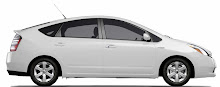
Toyota Prius Hybrid White

Subscribe to:
Post Comments (Atom)

 Posts
Posts


No comments:
Post a Comment