 Iceland has the world’s most ambitious goal for reducing greenhouse gases: It wants to wean itself entirely off petroleum. Until recently, Icelanders believed that using hydrogen as a vehicle fuel would offer an environmentally responsible alternative to petroleum.
 Last week, HybridCars.com took a drive through Reykjavik in one of 10 hydrogen-fueled Toyota Prius hybrids, offered as part of Hertz’s Reykjavik rental fleet.
The world’s first hydrogen filling station for cars, opened in 2003, sits on a six-lane beltway on the Vesturlandsvegurin highway on the eastern outskirts of Reykjavik. But only 13 vehicles in the entire country use the hydrogen pumps, according to a report last week in the Reykjavik Grapevine, an English-language alternative weekly. Ten of those are Hertz’s rental cars, developed by California firm Quantum Technologies.
More recently, Icelanders themselves have become cynical about hydrogen power—especially now that Mitsubishi plans to market a fully electric car there by 2010. A pilot program that put Daimler-manufactured, hydrogen-powered buses on Reykjavik streets ended in 2007, and likely won’t get repeated. At issue: The inefficiency of making hydrogen itself, which takes an enormous amount of electricity to create a relatively small amount of fuel.
Debates about energy aren’t academic in Iceland, which brings a slightly schizophrenic outlook to the table. On the one hand, the country’s love affair with SUVs and large automobiles has produced the world’s highest average vehicle emissions. With a population of 300,000, Iceland also tops other nations—including the US—in passenger cars per person.
 On the other hand, Iceland can claim the world’s most forward-thinking energy policies. More than 80 percent of energy here already comes from renewable sources, against roughly 15 percent at most in parts of the US. The government has pledged very publicly to rid Iceland of fossil fuels by 2050. Geothermal heating already warms most of Reykjavik’s homes and businesses. Downtown parking is free for biogas- and ethanol-powered cars; multi-fuel pumps are becoming more common. Three electric charging stations already serve greater Reykjavik—mostly for electric scooters, bikes, Segways, and the five electric cars that now tool around the city. To encourage buyers, the government even plans to eliminate import and value-added taxes on Mitsubishi’s electric car when it hits the market.
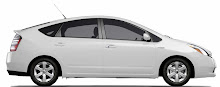
Until then, Hertz’s hydrogen-powered Priuses—available for around $300/day—make for an intriguing drive through the spectacular landscapes around Reykjavik. The car looks and feels like a conventional Prius, but with a few obvious differences. On the outside, the back bumper boasts a diamond-shaped green “HYDROGEN” sticker, along with a flag from Quantum Technologies.
Inside, the dashboard monitor gives live readings of hydrogen energy consumption, along with the electric power used. This Prius switches to electric power as you brake and stop, to allow the hydrogen energy to recharge momentarily. On the road, the car handles almost as smoothly as its conventional counterpart, with just a few quirks.
The loud, distinctive hum will sound familiar to anyone who’s driven a Prius, but the hydrogen version sounds a little less coarse than the gas-powered engine. Burned in a combustion engine, hydrogen gives less power than gasoline, so the car doesn’t accelerate with as much gusto as a Prius powered by fossil fuels. Even with the pedal to the floor, speeding up is gradual. Braking feels smooth, but the hydrogen Prius sputters and “putt-putts” slightly as it slows and stops.
Starting the car can be tricky for first-timers. With a foot on the brake, you insert the Prius’ rectangular chip into a dashboard slot and press a green “Start” button. Though the dashboard display lights up, the car doesn’t always power up the first time. It took one novice driver three tries to fire the hydrogen engine.
Drivers in Reykjavik are, for the most part, civilized and cautious, even when maneuvering stretch Hummers or Porsche Cayennes down the narrow streets of this compact capital. You don’t need to drive by any means, but if you have $300 to spare for the novelty of driving a hydrogen car, it’s worth the experience—at least until the Next Big Thing hits the road.
NOTE: Iceland Naturally provided airfare to Iceland and lodging in Reykjavik for our contributor Michael Kaminer. Photos by Michael Kaminer. All rights reserved.


 Posts
Posts


No comments:
Post a Comment