In recent years, the State of California has become the unofficial capital of plug-in hybrid technology. But proposed certification standards from the California Air Resource Board (CARB) could create an obstacle for small companies selling plug-in hybrid conversion kits. The kits—which allow owners of today’s hybrids to boost their fuel economy to as much as 100 mpg or higher—could have unintended negative consequences, according to CARB. Tests of some plug-in hybrid conversions at the Argonne National Laboratory revealed increased levels of air pollution. Apparently, changing a hybrid’s battery control system can also alter the vehicle’s electronic emissions system.
CARB officials want to see additional testing and to require consumer warranties for the kits—regardless of the cost. The agency currently requires that all aftermarket parts affecting a vehicle’s emissions meet high standards, but no certification process has been established for plug-in hybrid conversion kits.
Consumer demand for plug-in hybrids is rapidly climbing. Major auto companies like GM, Ford, Daimler, and Toyota say their plug-ins are coming, but not for at least a couple of years. Plug-in conversions of today's hybrids could fill the gap.
The proposed regulations (PDF) would require conversion companies to follow a test regimen similar in scale to those followed by automakers for new vehicles. They would also force manufacturers of plug-in conversion equipment to provide warranties of seven to 10 years.
The work of plug-in cheerleaders and kit manufacturers has been a key factor in inspiring—or prodding, depending on your view—major car companies to pursue plug-in hybrids. But rules designed for the big car companies to bring a vehicle to a mass market may end up preventing these small conversion companies from putting the first wave of plug-in hybrids on the road.
Plug-in Hybrid Over-Regulation
“Let's take this step by step and not shut down the small innovators," said Ron Gremban, technical lead at CalCars, the most prominent plug-in hybrid advocacy group. “Conversions, when sold in significant quantities, will need to prove in some way that they do not increase criteria emissions. But in order to avoid a high cost of entry that would prevent small, innovative, shoestring-budget operations from starting out, there is high value in tolerating small quantities of conversions with lower-level oversight.” He argues that for small volumes—fewer than 1,000 units per year—the stringent criteria proposed by CARB should not be required.
“Why throw the baby out with the bathwater?” said Daniel Sherwood, president of 3Prong Power Inc., a plug-in hybrid conversion startup based in Berkeley, California. In an interview with HybridCars.com, Sherwood said, “A few hundred cars, even if not optimally designed to contain evaporative emissions, won't have a measurable effect on air quality. Let's not make California the only state in the nation where you can't buy a plug-in car because of over-regulation.”
Two other points of contention with the CARB proposal are the standardization of a Yazaki charging coupler (PDF) and a maximum four-hour charging time. Plug-in advocates say the specification of one manufacturer is too narrow and does not allow for future developments, while the four-hour charging rule actually runs counter to the typical overnight charging plan for most plug-ins. In other words, it could keep plug-in hybrids from utilizing the simplest source of electricity—a standard wall outlet.
While the proposed environmental and consumer protections may make sense in the long run, many plug-in advocates worry that the tough rules could kill an embryonic industry. Their push back was strong enough that CARB delayed consideration of the new rules from October to December of this year. In the meantime, anyone considering converting a Prius may have a limited window of opportunity to get the work done in California.
Toyota Prius Hybrid
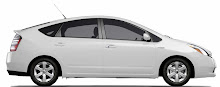
Toyota Prius Hybrid White

Subscribe to:
Post Comments (Atom)

 Posts
Posts


No comments:
Post a Comment